How to Read Pressure Trends
Learn how to read rising, falling, and steady pressure trends using direction, change, time interval, pressure type, and real examples.
 Barometric Pressure
Download
Barometric Pressure
Download
Resources
A growing library for reading sea-level pressure, understanding pressure trends, and using Barometric Pressure for sailing, outdoors, and migraine-aware routines.
Guides
Learn how to read rising, falling, and steady pressure trends using direction, change, time interval, pressure type, and real examples.
Follow a simple workflow for checking the pressure curve, saving notes, and reviewing migraine days with more consistency instead of relying on memory alone.
Improve pressure history collection by checking background refresh, permissions, and the habits that affect background sampling on supported mobile devices.
Set up rapid pressure change alerts and use them as a general reminder to check the graph, save notes, and avoid relying on memory alone.
Build a fast pre-departure pressure check that complements your marine forecast, local observations, and route plan before sailing days.
Use rapid pressure change alerts as an early prompt for storm awareness, route review, and weather checks without treating the alert as a forecast by itself.
Use Barometric Pressure notes to log headache timing, symptom intensity, and recent weather context without turning the process into a full journal.
Track migraine weather triggers by pairing pressure history with repeatable notes about sleep, stress, meals, travel, and symptom timing.
Use pressure trends, wind, clouds, and local notes to judge how a pre-front fishing window is really setting up before and during the trip.
Use Cases
Use pressure trends as one input for bass fishing decisions by comparing the curve with fronts, cover, season, water temperature, and your own trip notes.
Use local pressure trends for inshore fishing without ignoring the bigger drivers like tide, current, wind, bait movement, and changing weather.
Learn why sailors keep a barometer on board or in a pocket weather routine, and where local pressure history adds value before, during, and after a sailing day.
Use local pressure trends to add context before hikes, ridge days, and backcountry routes where fast weather changes matter.
Use local pressure history before and during a camping trip to add context around setup decisions, weather shifts, and overnight conditions.
Use Barometric Pressure as a fishing trip log before, during, and after the session so local trend, notes, and timing stay in one record.
Understand when migraine pressure tracking is worth trying, what it can realistically help with, and how Barometric Pressure fits into a calmer awareness routine.
Articles
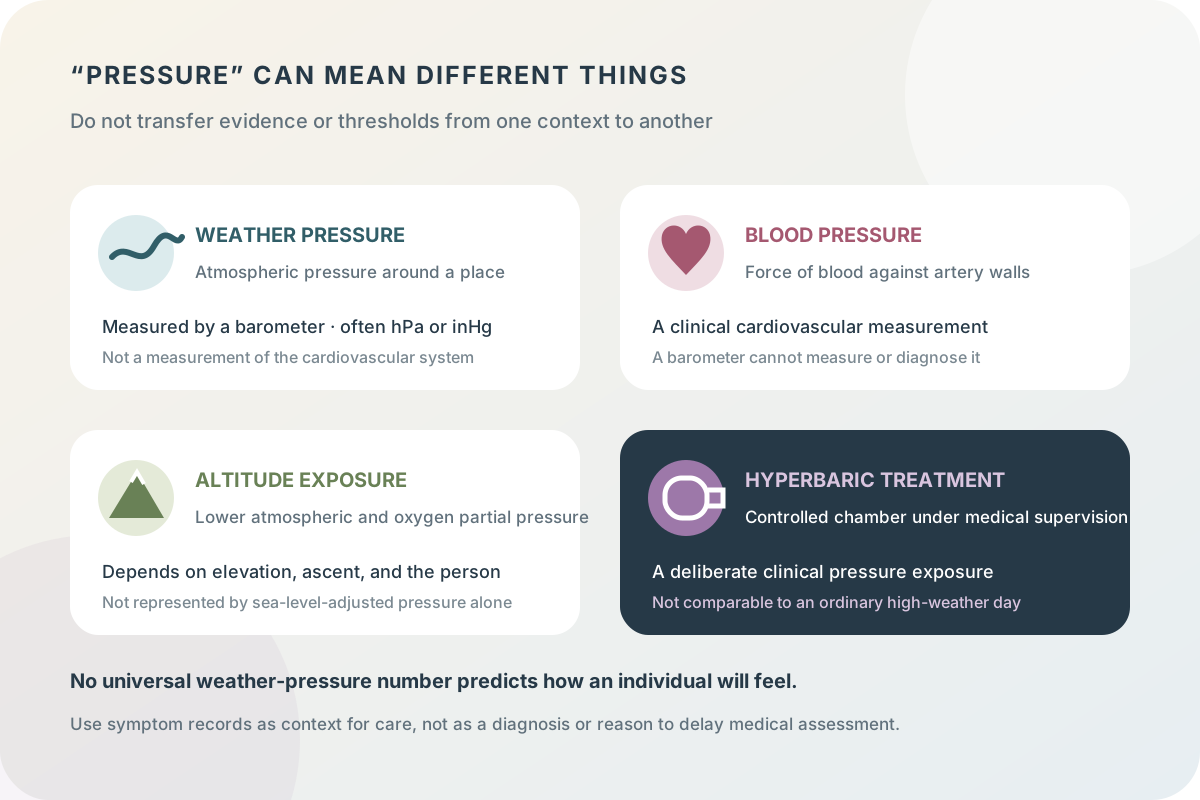
What does high barometric pressure mean for your body? Review evidence on headaches and pain, distinguish blood pressure, and learn what a barometer cannot tell you.
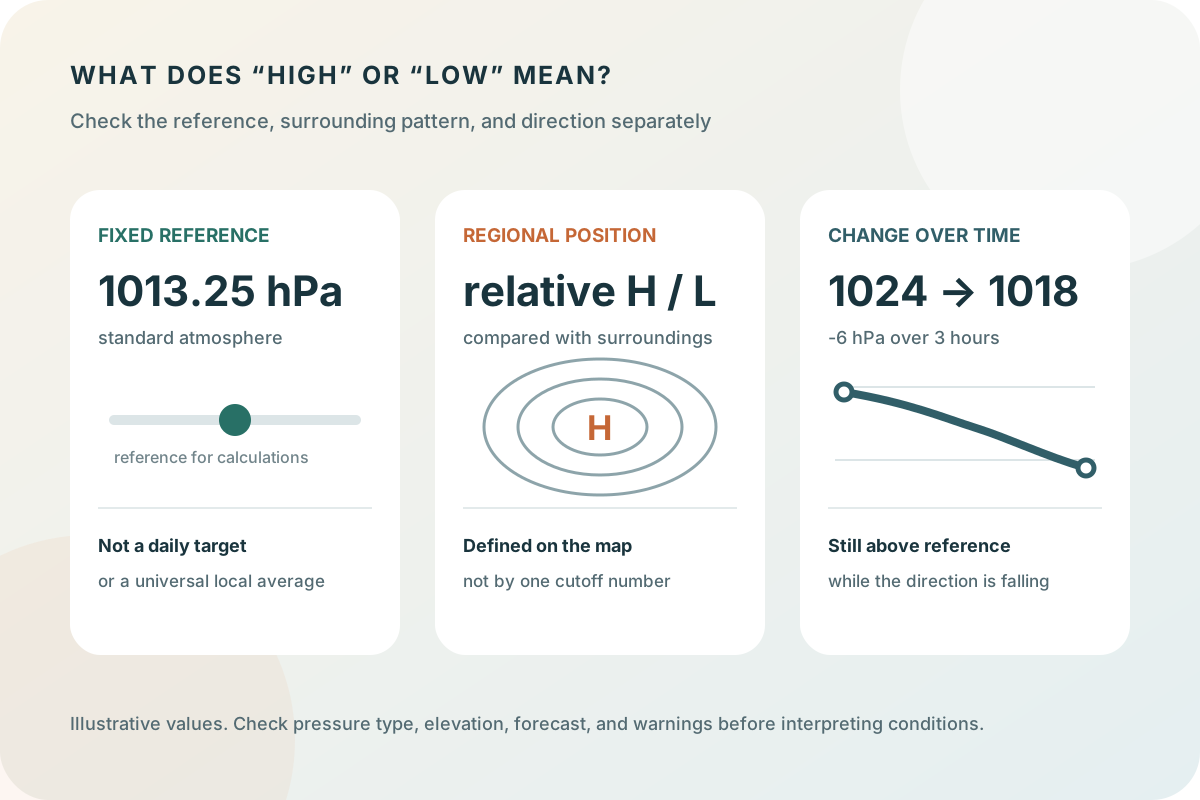
Understand normal barometric pressure, the 1013.25 hPa reference, and what high or low readings mean. Compare units, elevation, and real-world examples.
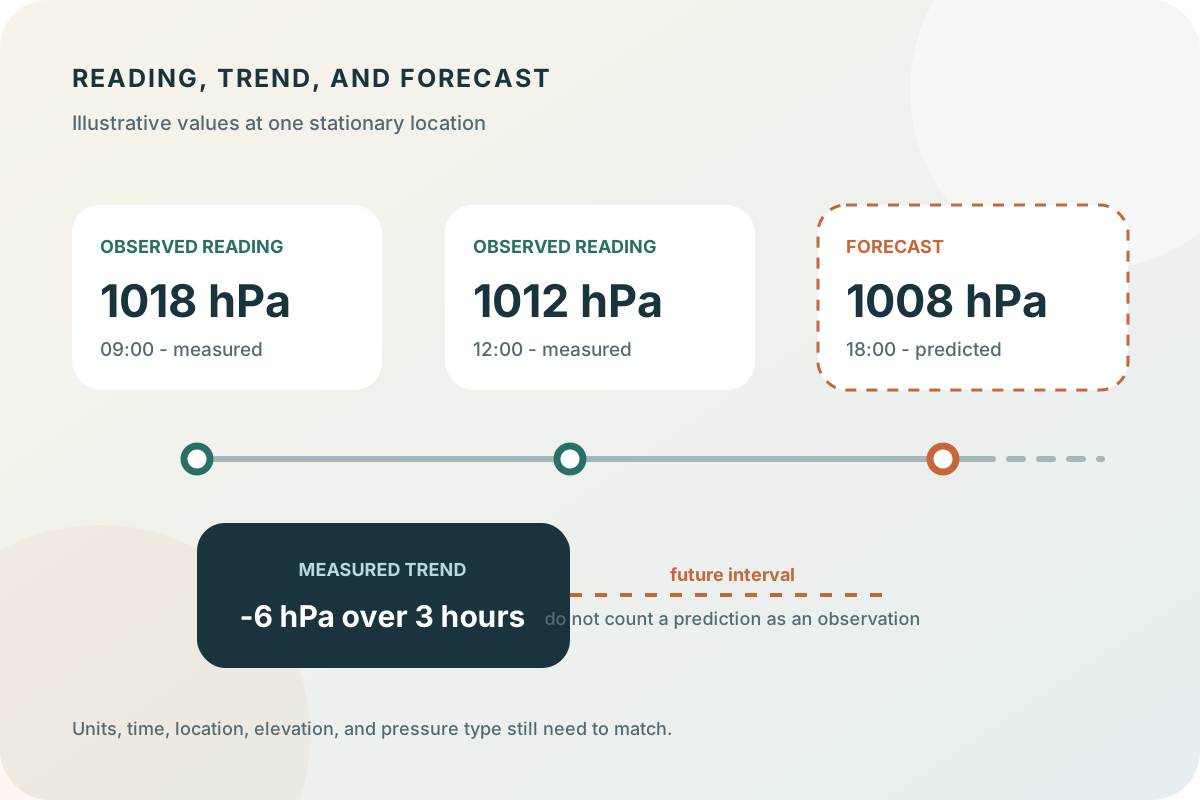
Barometric pressure is atmospheric pressure measured by a barometer. Learn what the reading means, why it changes, and how units and elevation affect it.
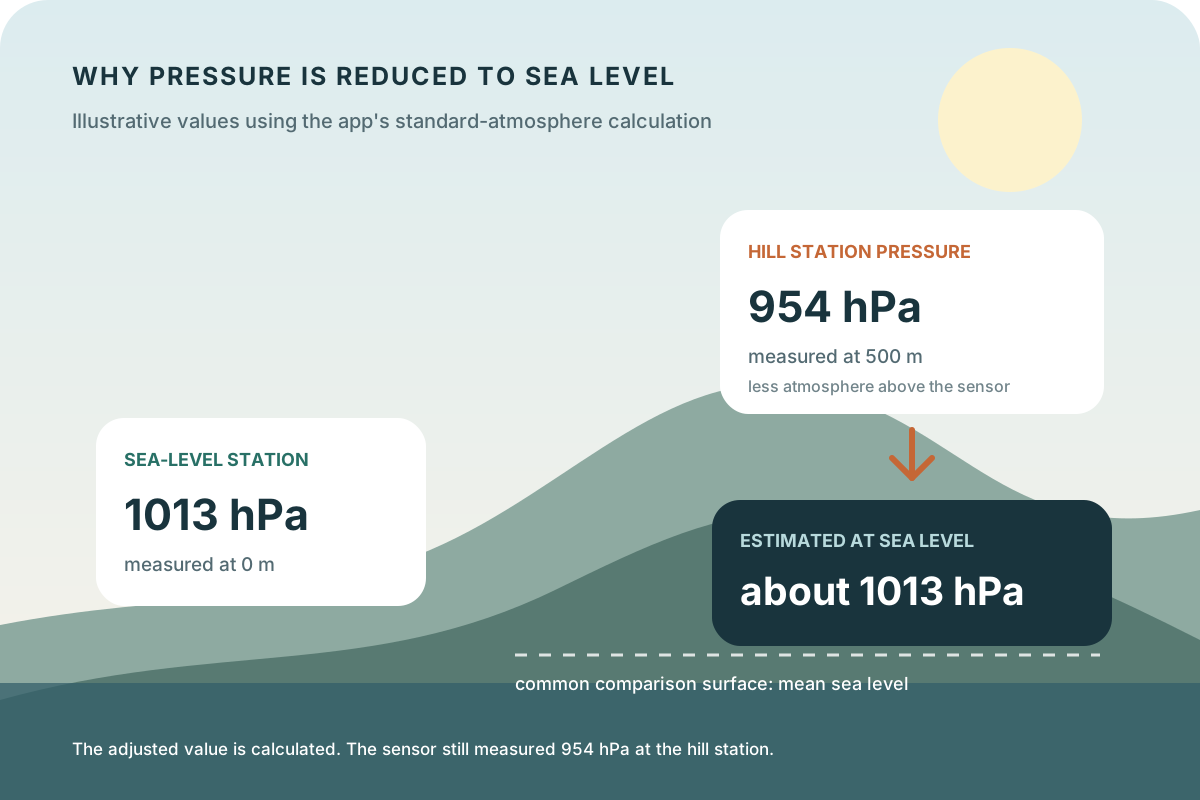
Sea-level pressure is station pressure adjusted to a common elevation. Learn why weather maps use it, how Barometer estimates it, and how to compare values.
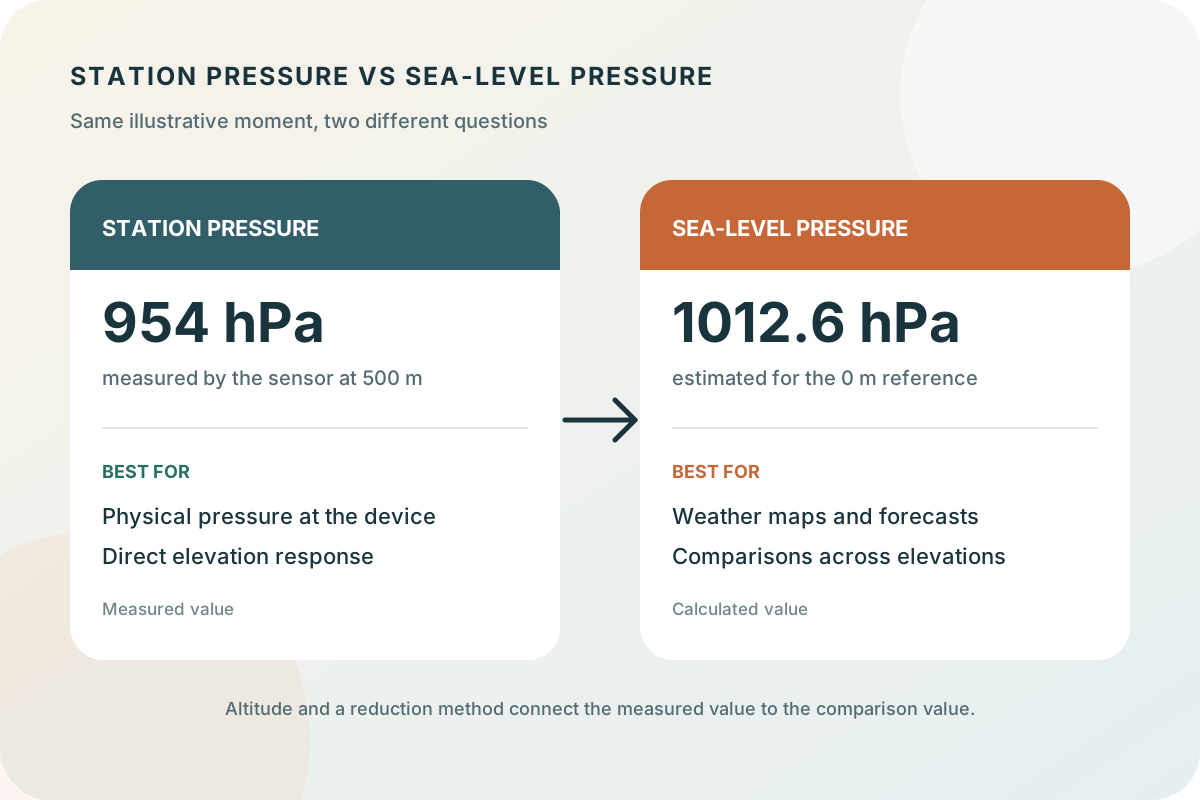
Compare station pressure with sea-level pressure, see which one weather maps use, and troubleshoot differences between a phone sensor, station, and forecast.
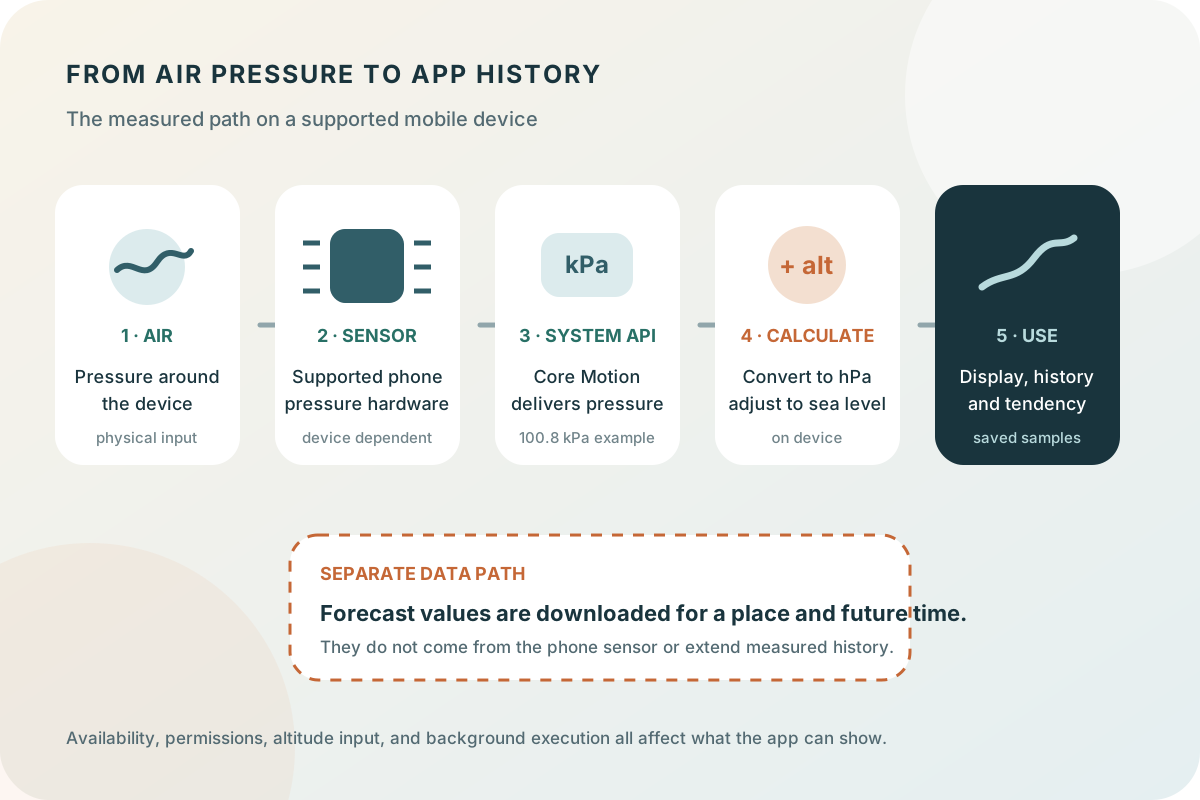
Learn how phone pressure sensors work, which iPhone and Android models include barometers, and how altitude or location supports sea-level pressure.
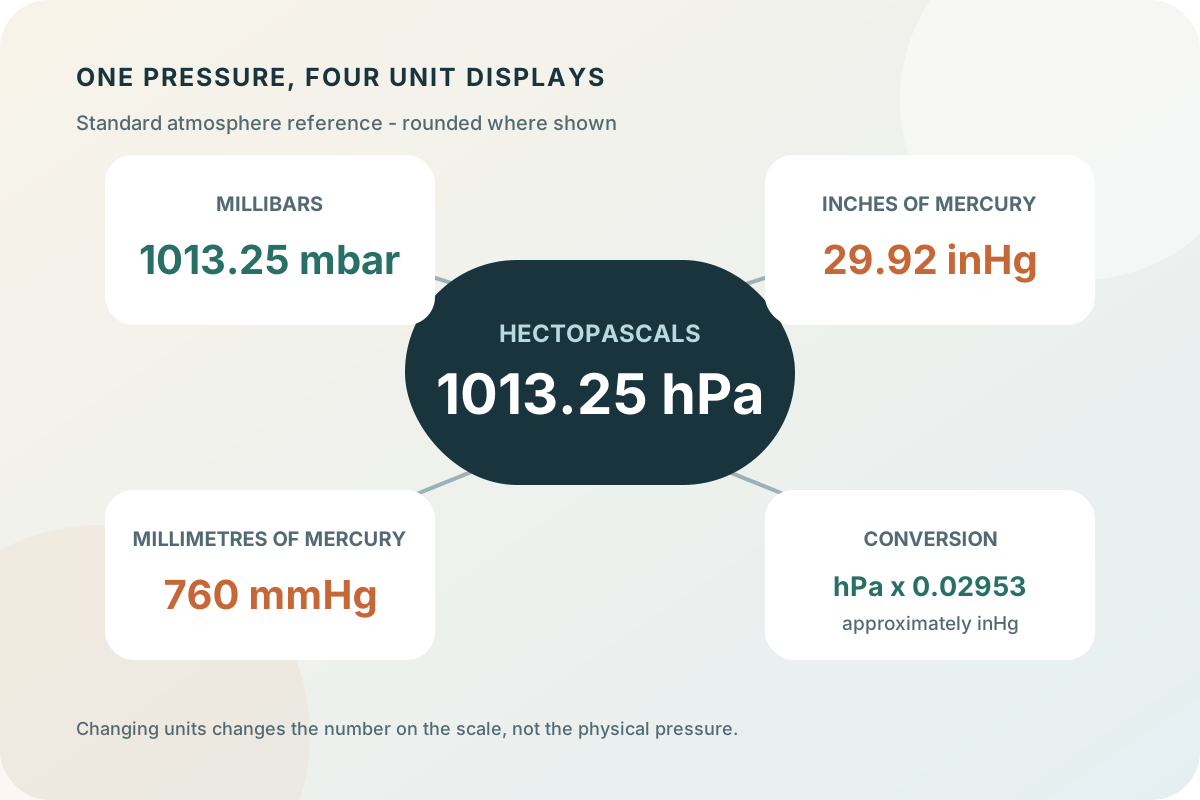
Convert hPa to inHg, compare common pressure values, and learn when to use hectopascals, millibars, inches of mercury, or mmHg.
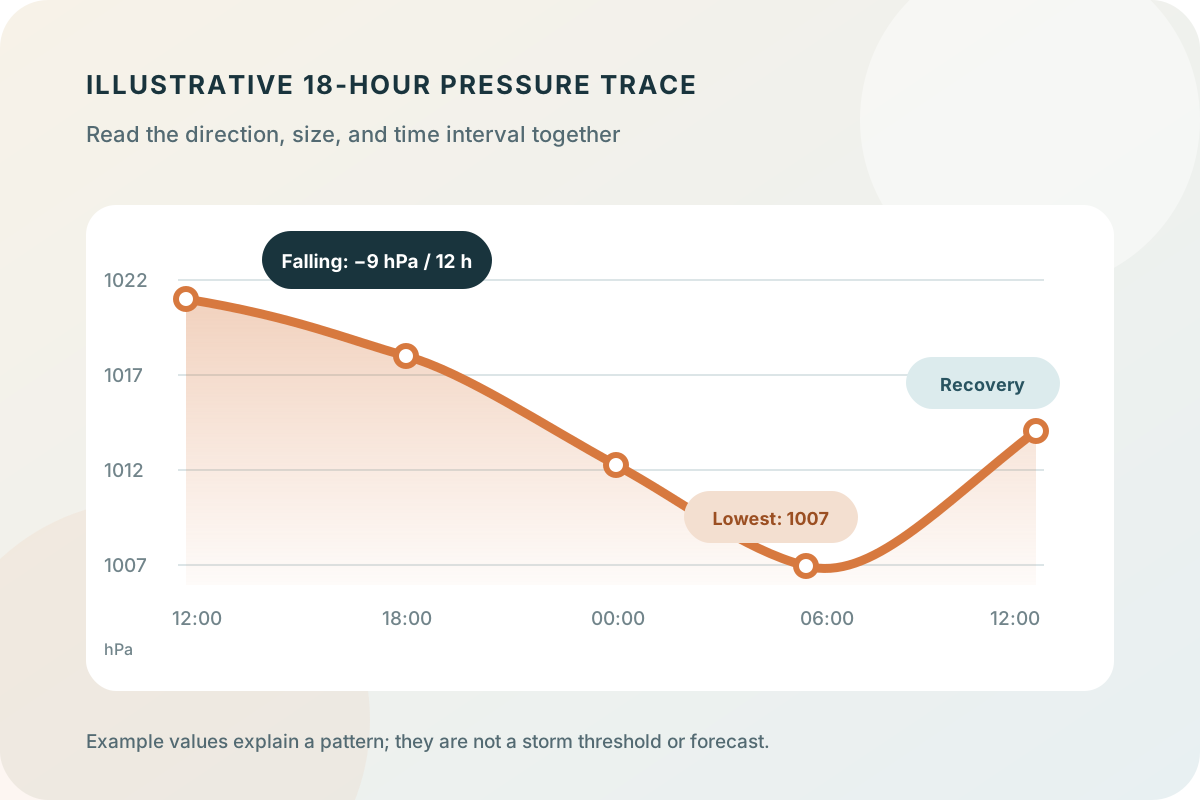
Learn what falling barometric pressure means, how to measure the change over time, and why a pressure drop is context rather than a weather guarantee.
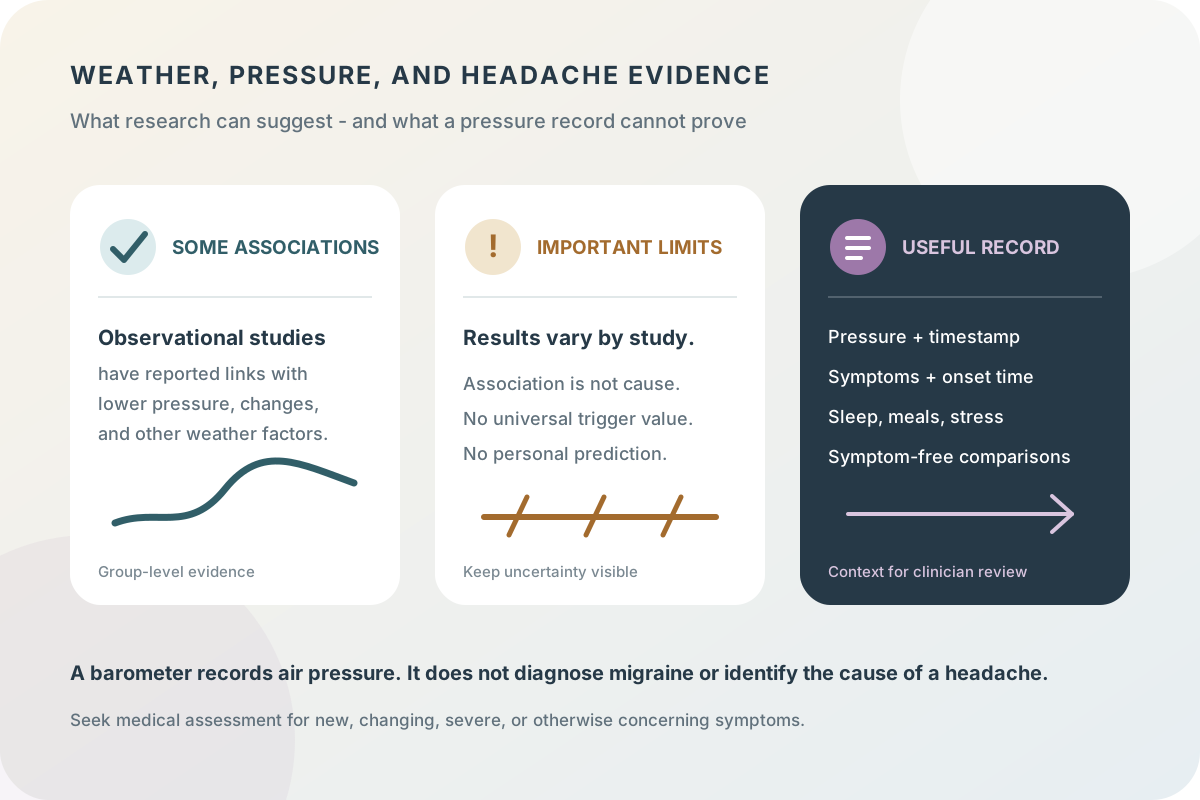
Explore the evidence linking pressure changes with headaches and migraine, what studies cannot prove, and how notes and pressure history can support tracking.
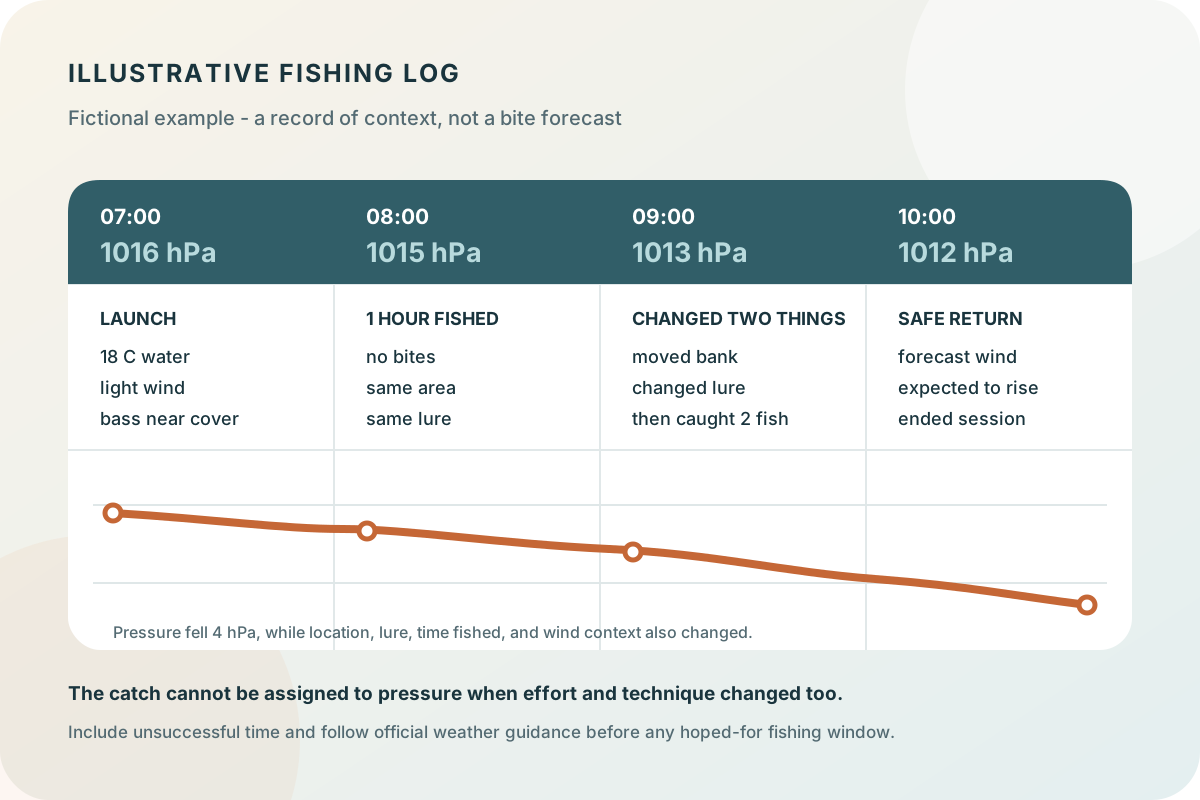
Is there a best pressure for fishing? Compare pressure trends with water temperature, fronts, and fishing effort using practical scenarios and a sample trip log.
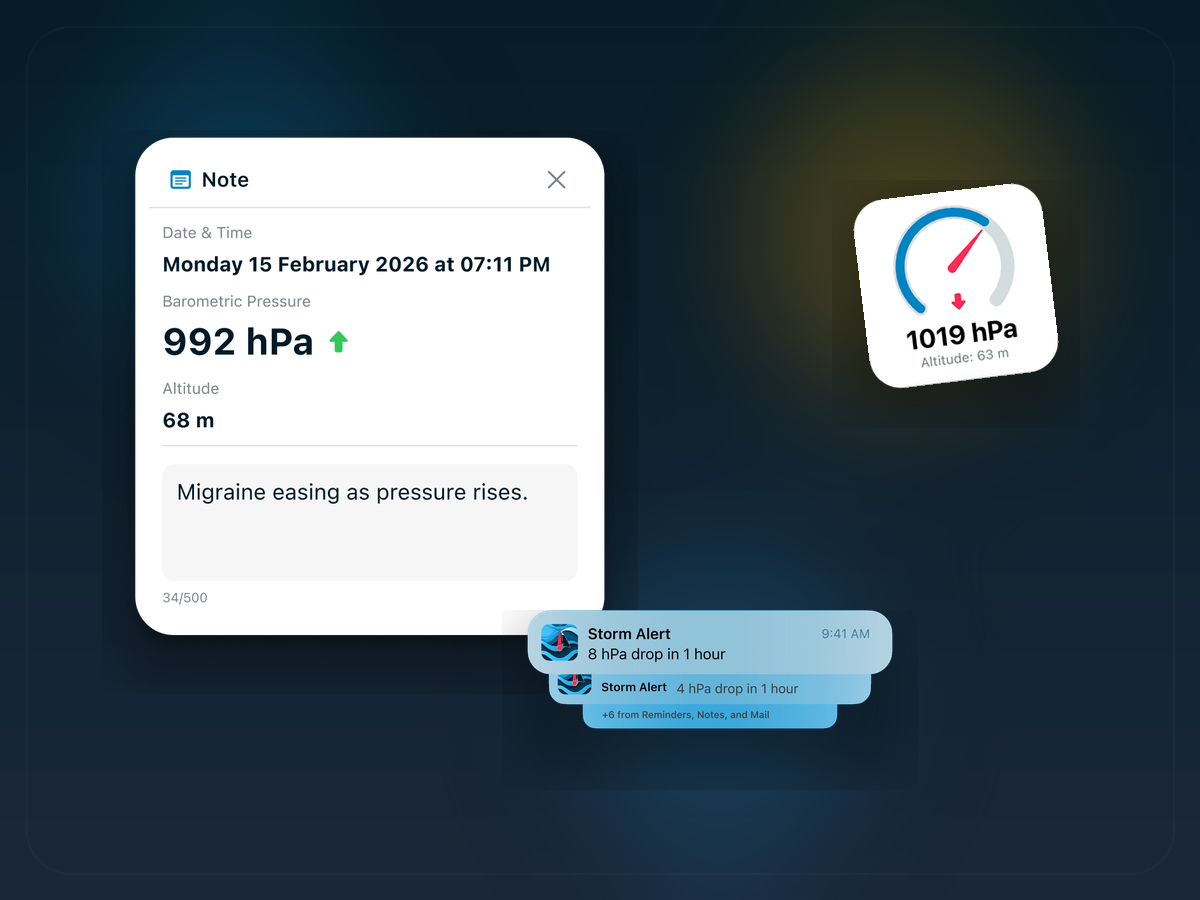
Learn how rising, falling, and steady pressure trends fit into fishing decisions, and why the real value is understanding fronts, timing, and local context.
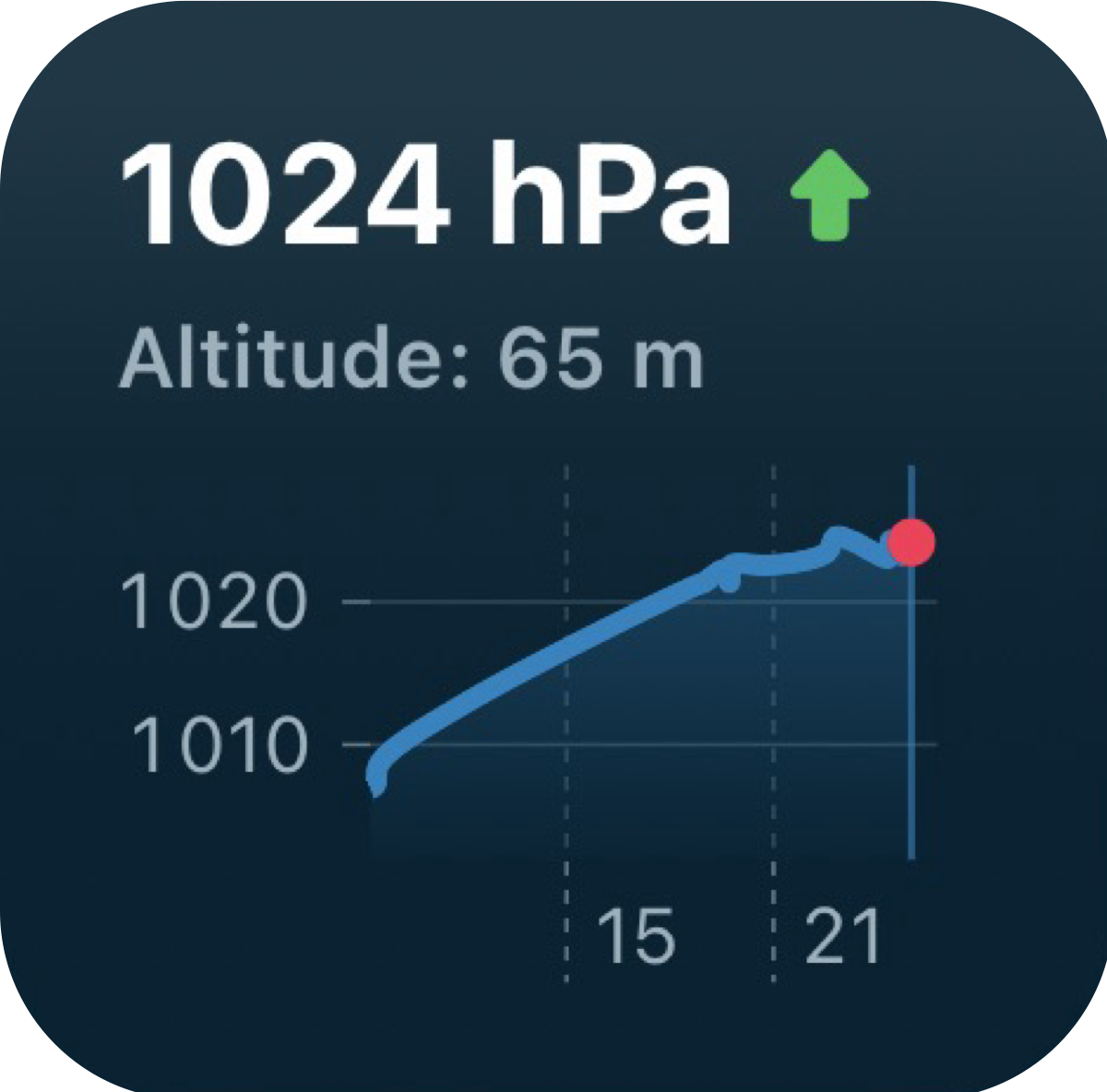
Compare a local barometer with a general weather app for fishing decisions, and learn why they work best together rather than against each other.
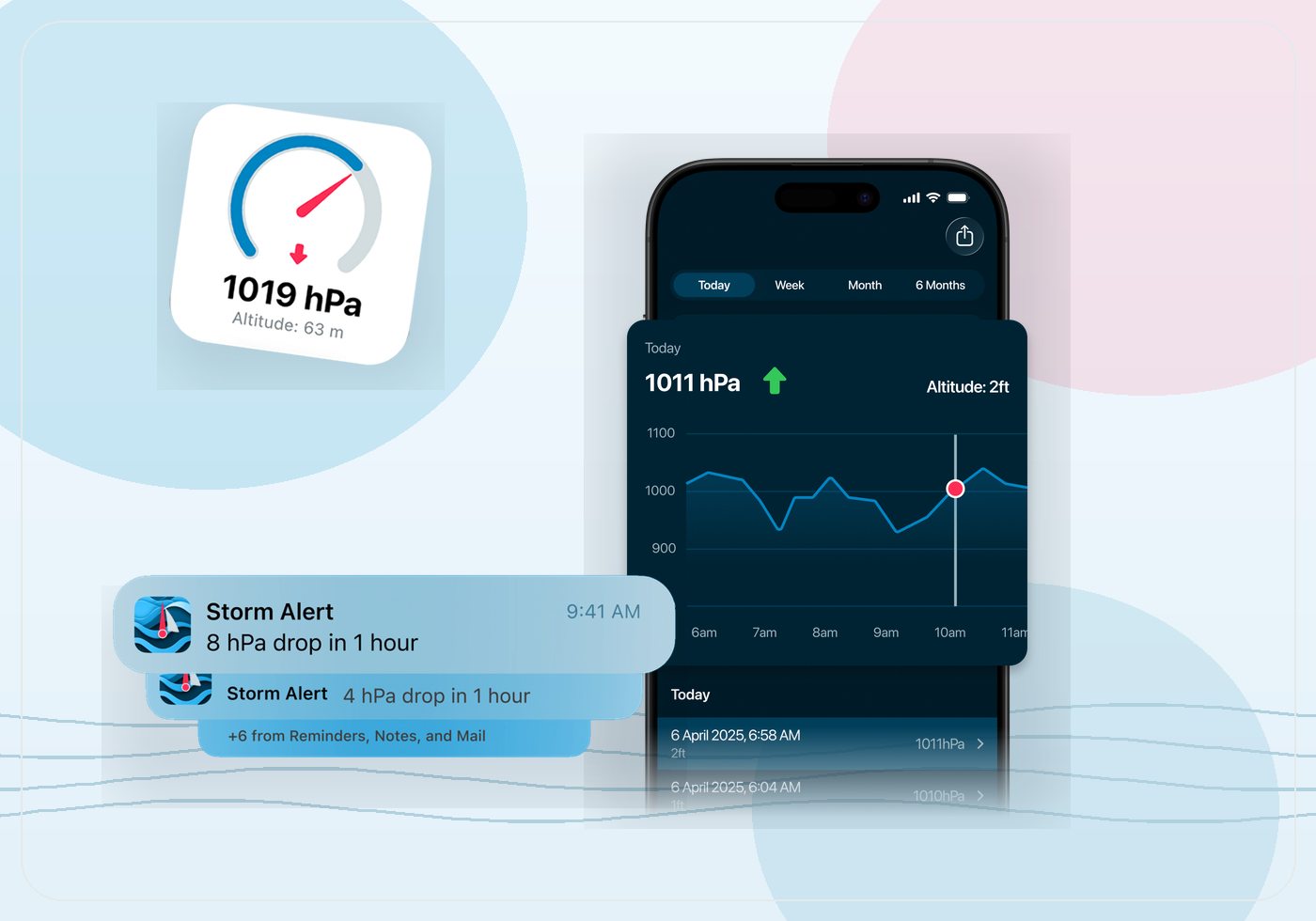
Learn how coastal fronts and changing pressure can reshape wind, timing, and weather awareness before and during nearshore days.