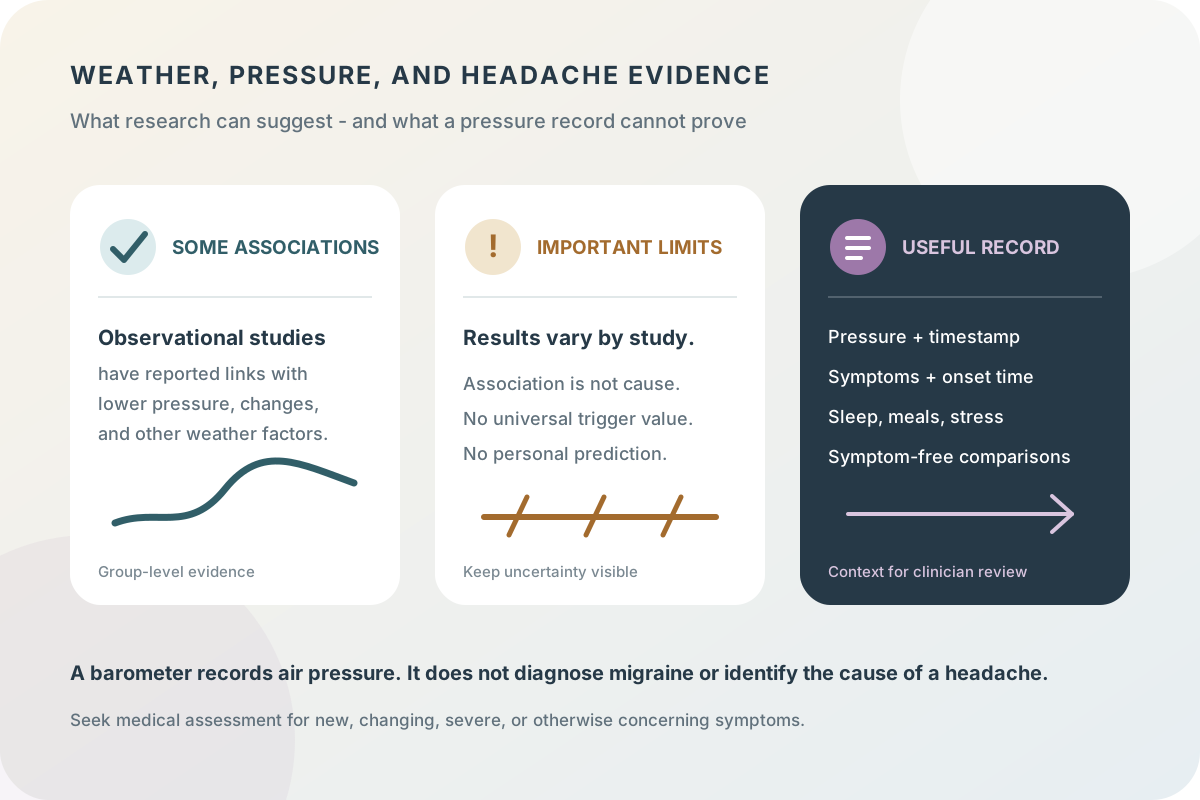
What does the research actually show?
A 2023 retrospective smartphone study analyzed 4375 users and found associations between headache occurrence and several weather measures, including lower pressure and pressure changes. It was observational: it did not randomly expose people to different pressures or demonstrate that a particular change would cause a headache in a particular person.
A 2026 Ontario study used 69,808 recorded migraine attacks from 7418 consenting app users. Its models suggested increased odds of attacks with pressure drops, alongside associations with other environmental exposures. This adds evidence for a possible relationship, but it is not validation of Barometer, its alerts, or any personal attack prediction.
Results are not uniformly positive. A prospective diary study of 238 people initially found associations with some weather patterns, including a high-pressure ridge. None remained statistically significant after correction for multiple testing. That qualification matters: selecting a promising result while leaving out the correction would give a misleading impression.
2023 smartphone study: observational headache and weather associations
2026 Ontario study: environmental exposures and recorded migraine attacks
Prospective diary study: findings after multiple-testing correction
Key takeaways
- An association in a study does not prove that pressure caused an individual attack.
- Pressure changes, absolute pressure, and other weather conditions are different exposures.
- Record symptom-free days as well as headache days to avoid reviewing only apparent matches.
Is it low pressure, high pressure, or a change?
Those are separate questions. A reading can be relatively high and falling, or relatively low and rising. Research has used different exposures and timing windows: daily levels, changes over hours or days, and broader weather patterns. A threshold quoted from one study should not become a universal migraine-alert setting.
Weather variables also move together. Temperature, humidity, light, and air pollution can change while pressure changes. Meanwhile sleep, stress, meals, and other personal circumstances may differ. A pressure graph alone cannot separate these possibilities, even when a headache and a drop appear close together.
Comparing against the standard atmosphere is a weather-reference exercise, not a medical test. Being above or below 1013.25 hPa does not classify a day as safe or unsafe for migraine.
Understand the standard-pressure reference
High pressure and the body: other effects and common misconceptions
How can a barometer help with migraine tracking?
The useful role is a timestamped record. On a supported device, Barometer stores pressure measurements and lets you attach notes to a saved measurement. Widgets make the reading easier to check; alerts can call attention to measured or forecast pressure changes. An alert describes pressure, not a diagnosis or a guaranteed headache warning.
For an illustrative note, record 'headache began around 14:00; poor sleep; lunch delayed' rather than 'pressure caused headache.' The first preserves observations. The second assumes the answer before you have compared other days. Record the actual symptom onset even if you add the note later.
Include times when similar pressure changes occurred without symptoms, and symptoms that occurred without a noticeable pressure change. Keep the data source clear: the app's saved sensor history describes collected measurements, while a downloaded forecast describes expected conditions. Background gaps and changes in elevation should also be noted.
What can you do on a pressure-change day?
Use the migraine plan you have agreed with your healthcare professional. Regular sleep and meals, appropriate hydration, and access to prescribed treatment can be more practical than repeatedly checking the dial. Discuss preventive or acute treatment questions with your clinician rather than changing medication because a pressure value crosses a line.
If a forecast or notification is useful, treat it as a reminder to prepare, not a reason to expect an attack. If monitoring increases worry or leads to constant checking, reduce the checking frequency or pause it. A tool should make the routine easier, not become another burden.
When reviewing the record, bring a few representative examples and the broader symptom history to an appointment. A clinician can assess headache patterns and other explanations that a weather app cannot evaluate.
American Migraine Foundation: seasonal migraine and practical preparation
When should you seek medical help instead of checking pressure?
Seek emergency care for a sudden severe headache that reaches its maximum intensity rapidly, or for new sudden weakness, difficulty speaking, or other unusual neurological symptoms. Do not assume these are caused by weather because the pressure is changing.
Arrange a medical assessment if headaches are new, changing, becoming more frequent, or disrupting daily life. A graph cannot rule out another cause. Familiar migraine symptoms should be managed according to your clinician's advice, and a new or substantially different pattern deserves attention.
American Migraine Foundation: headache warning signs and emergency care