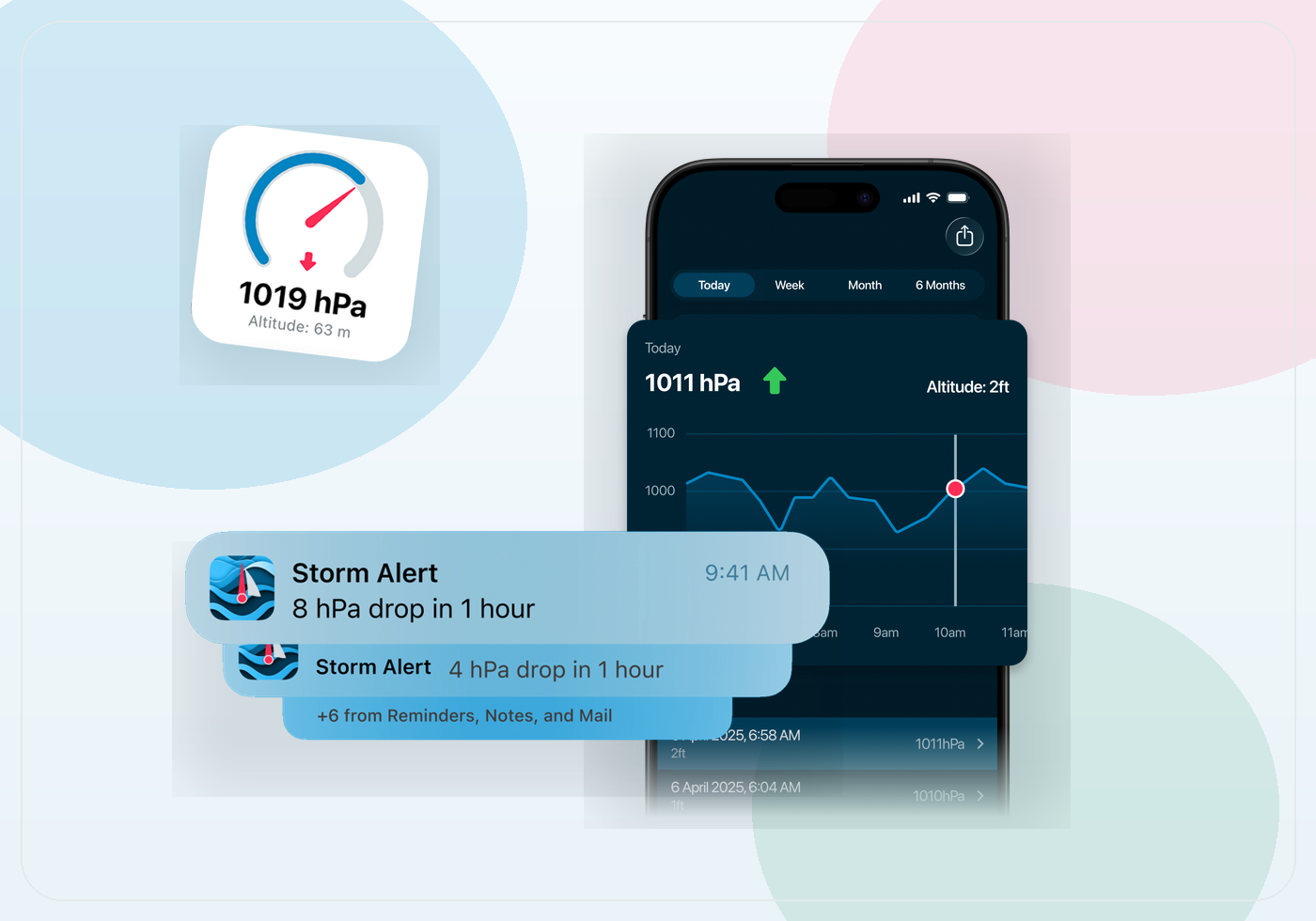
Why alerts focus on change
A single pressure number can be interesting, but the more practical question is often whether the pressure is changing unusually quickly. Alerts make that easier to catch. Instead of constantly reopening the app, you can let the system warn you when the local curve has moved enough to be worth another look.
That is especially helpful because daily life is noisy. Most people do not want to stare at a graph to notice the one part of the day when the atmosphere starts shifting. The alert turns that moment into a simple prompt without pretending it can replace judgment.
How to respond when one arrives
The best first step is to open the app and read the recent pressure graph. Look at how sharp the move is, what the last few hours looked like, and whether the alert fits with anything else you are already seeing. Is the weather changing? Is this a day you already expected to watch more closely? Is it worth saving a note so you remember what happened later?
That small pause matters. It keeps the alert from turning into alarm fatigue and helps you use it as one more decision input. Sometimes the best response is simply to stay aware and keep checking. Other times it is the right moment to save a note or compare the alert with your plans for the rest of the day.
Where alerts are most helpful day to day
Alerts are especially strong in routines where local change matters more than a generic forecast headline. Outdoor plans, pressure-sensitive symptom tracking, trip prep, and ordinary weather-awareness habits all benefit from a heads-up when the curve starts moving faster than usual.
They are also helpful if you already know you forget to check the app until late. In that case, the alert is less about meteorology and more about habit support. It makes the tool easier to use consistently.
Key takeaways
- Alerts are about rate of change, not a magic threshold of danger.
- They are strongest as a reminder habit paired with history and notes.
- A well-timed alert can reduce the need to keep checking the app manually.
How to keep alerts useful over time
Alerts stay useful when they are paired with occasional review. If you save a note after a meaningful alert, you create a record of which changes actually mattered. Over time, that helps you understand whether alerts are mainly useful for symptom awareness, trip prep, or simply as a reminder to pay attention to the local curve.
The strongest pressure routine usually combines alerts, history, and notes. Alerts catch the moment. History explains the shape of the day. Notes explain why that moment mattered to you.