What falling barometric pressure actually means
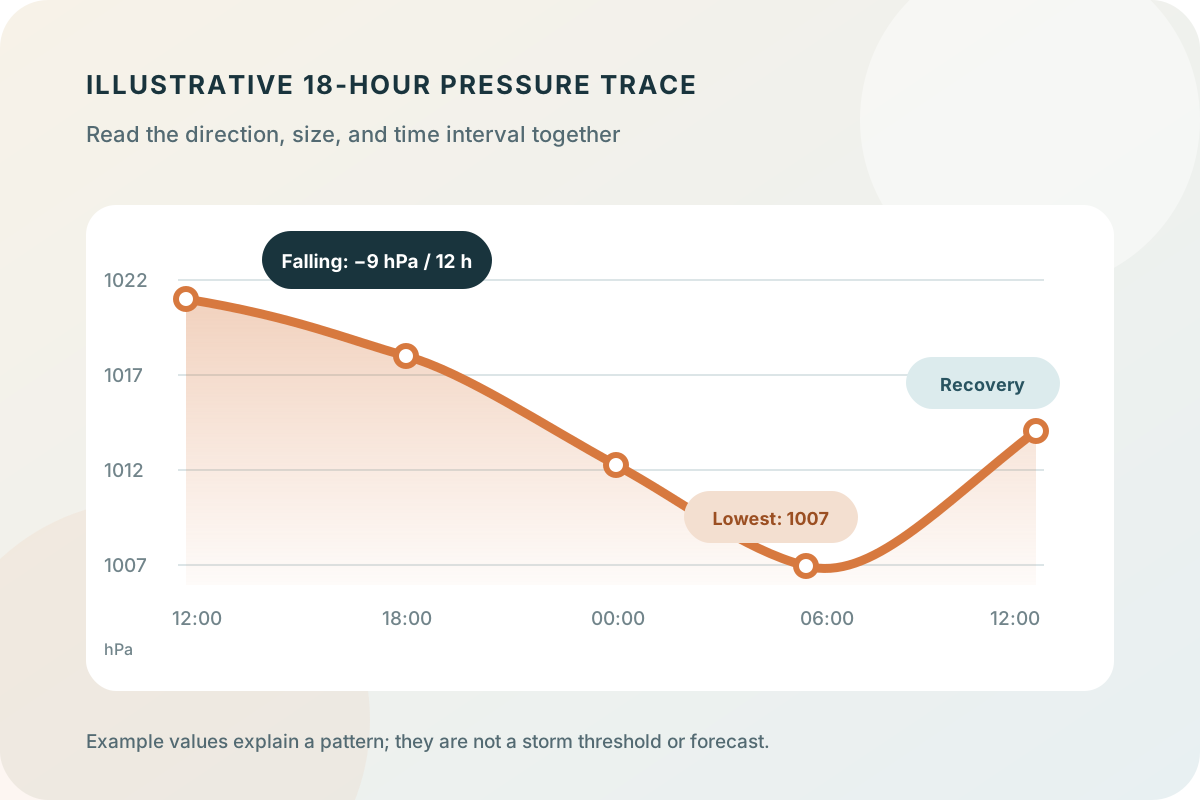
A pressure trend compares readings at the same place across time. For example, 1018 hPa at 09:00 and 1012 hPa at 12:00 is a fall of 6 hPa over three hours. Without the interval, saying that pressure fell by 6 hPa leaves out information needed to interpret the pace.
A falling value is not the same as a low-pressure system. A reading can fall while remaining above the standard-atmosphere reference, or rise while remaining below it. Weather-map highs and lows are also defined relative to surrounding pressure, not by one universal cutoff.
Understand normal, high, and low pressure without using a universal weather threshold
Key takeaways
- Falling pressure and low pressure are different: one describes change over time, the other describes a level or regional feature.
- A useful trend states the start value, end value, time interval, and pressure type.
- Elevation changes and normal atmospheric tides can affect a trace, so pressure must be checked against broader weather information.
Why pressure often falls around changing weather
Pressure changes as air masses and weather systems move and develop. National Weather Service educational material notes that pressure commonly falls before a cold front arrives and rises after it passes. That is a recurring pattern, not a promise about the timing or severity of weather at one address.
Pressure may also change for less dramatic reasons. The atmosphere has a small daily pressure cycle, and a phone carried uphill records lower raw pressure because less atmosphere is above it. Before attributing a drop to weather, confirm that you are comparing the same pressure type and that the device did not change elevation substantially.
How to read the size and pace of a drop
Read a curve with four facts: the starting pressure, ending pressure, elapsed time, and measurement type. The illustration above falls from 1021 to 1007 hPa before recovering. It is deliberately labeled illustrative because the same shape does not produce the same local weather everywhere.
Compare like with like. A three-hour change in measured sea-level pressure is not directly interchangeable with a forecast curve, raw surface pressure, or readings collected while climbing. If the graph has gaps, describe only what the available samples support.
What a pressure drop cannot tell you
Pressure alone cannot tell you when precipitation will begin, whether lightning is present, how strong a wind gust will be, or whether travel is safe. A fast fall is a reason to review the wider situation, not a substitute for an official forecast or warning.
For outdoor decisions, start with the relevant weather or marine authority. Then use the pressure record to understand how the local pattern is evolving. A stable or rising barometer does not cancel a warning, and a falling barometer does not create one.
Compare the measured pattern with the barometric pressure forecast
Use history and alerts as a review workflow
Barometer keeps supported-device readings in local history so you can inspect when a fall began, how long it continued, and whether it recovered. A pressure-change alert is a prompt to open the graph and check context; it is not a storm alert generated by a weather authority.
Add a note when the context changes, such as moving to a different elevation or checking an official warning. That makes the record easier to interpret later and reduces the temptation to assign every visible change to the weather.