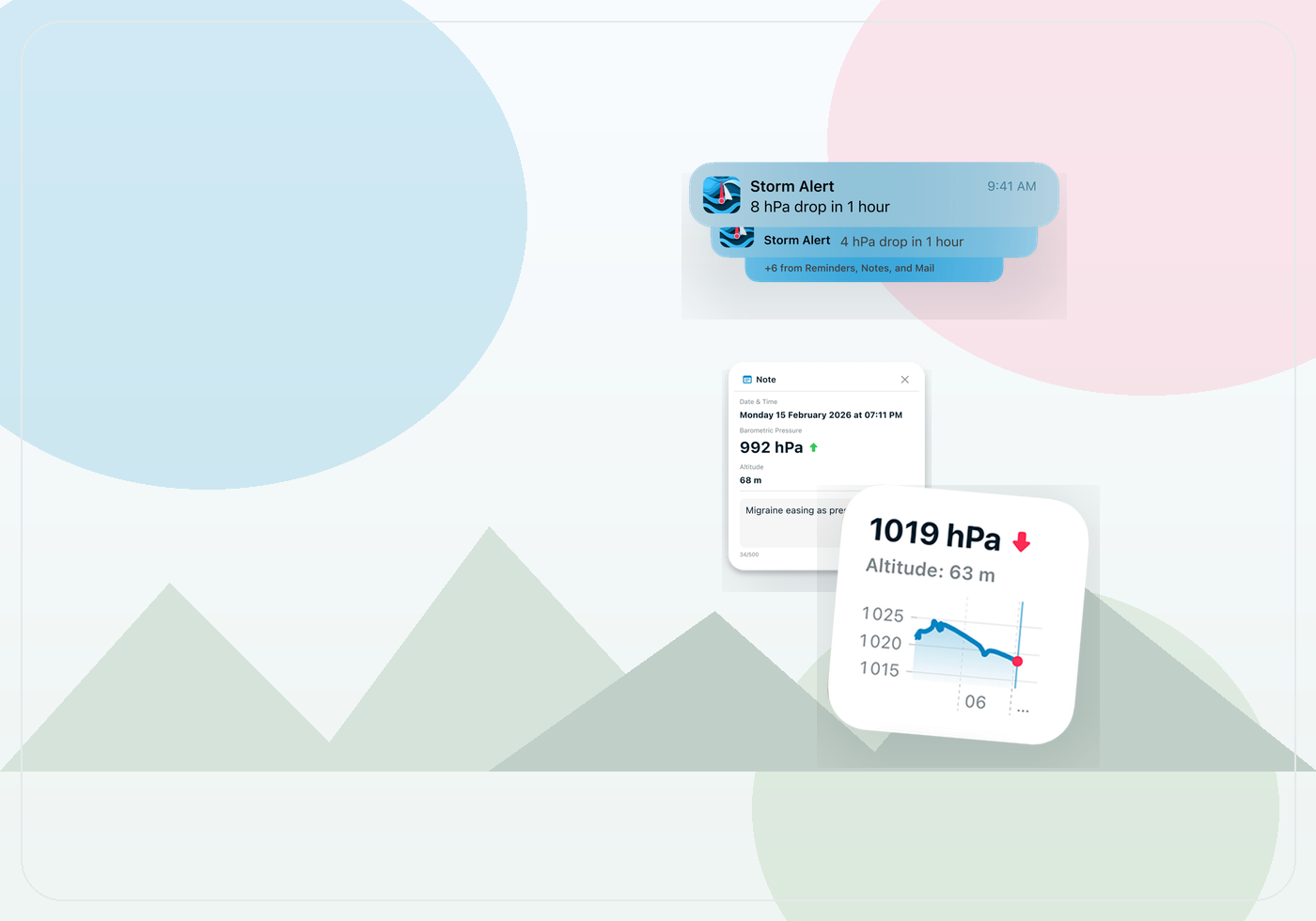
Check pressure before you commit to camp
If the pressure has been flat or gradually improving, that supports a more settled interpretation of the afternoon. If it has been dropping sharply, that does not automatically mean the trip is in trouble, but it does suggest you should think more carefully about exposure, drainage, and how fast you want camp established.
This is especially useful on trips where the site itself is flexible. Pressure becomes part of the decision about when to stop, where to stop, and how much caution to build in before dark.
Use the graph to support small setup choices
Camping weather decisions are often about small margins rather than all-or-nothing calls. Do you pitch higher or lower? Do you keep the tarp ready? Do you leave gear out or stow it early? Learning to read a pressure trend can nudge those decisions by confirming whether the day feels calm for a reason or calm only for the moment.
Because the graph shows direction over time, it is often more useful than reopening a generic forecast page and trying to guess how current it still is. The more isolated the trip, the more valuable that local record becomes.
Overnight notes become useful fast
Save notes after nights that felt especially calm, damp, windy, or unstable. You do not need a long journal entry. A line about a rough midnight wind change or an unexpectedly quiet night is enough. Later, that helps you compare whether similar pressure patterns kept appearing before the same kind of camp experience.
Those notes are also helpful for future trip planning. If a certain type of fall kept lining up with uncomfortable overnight weather, that becomes part of your own field sense rather than something you have to relearn each season.
Key takeaways
- Pressure trends can support smarter setup timing and overnight weather awareness.
- A falling curve before camp matters more than a single low reading at arrival.
- Notes help you compare how previous camp nights lined up with pressure movement.
Why Barometer fits camping use
Barometer is useful on camping trips because it stays local, works without a network connection, and lets you keep the graph, alerts, and notes in one place. It does not replace the forecast you check before leaving town, but it does keep adding context after the signal is gone.
That is often exactly what a trip needs: not more complexity, just one more dependable reference that helps you notice whether the atmosphere is staying quiet or beginning to move.