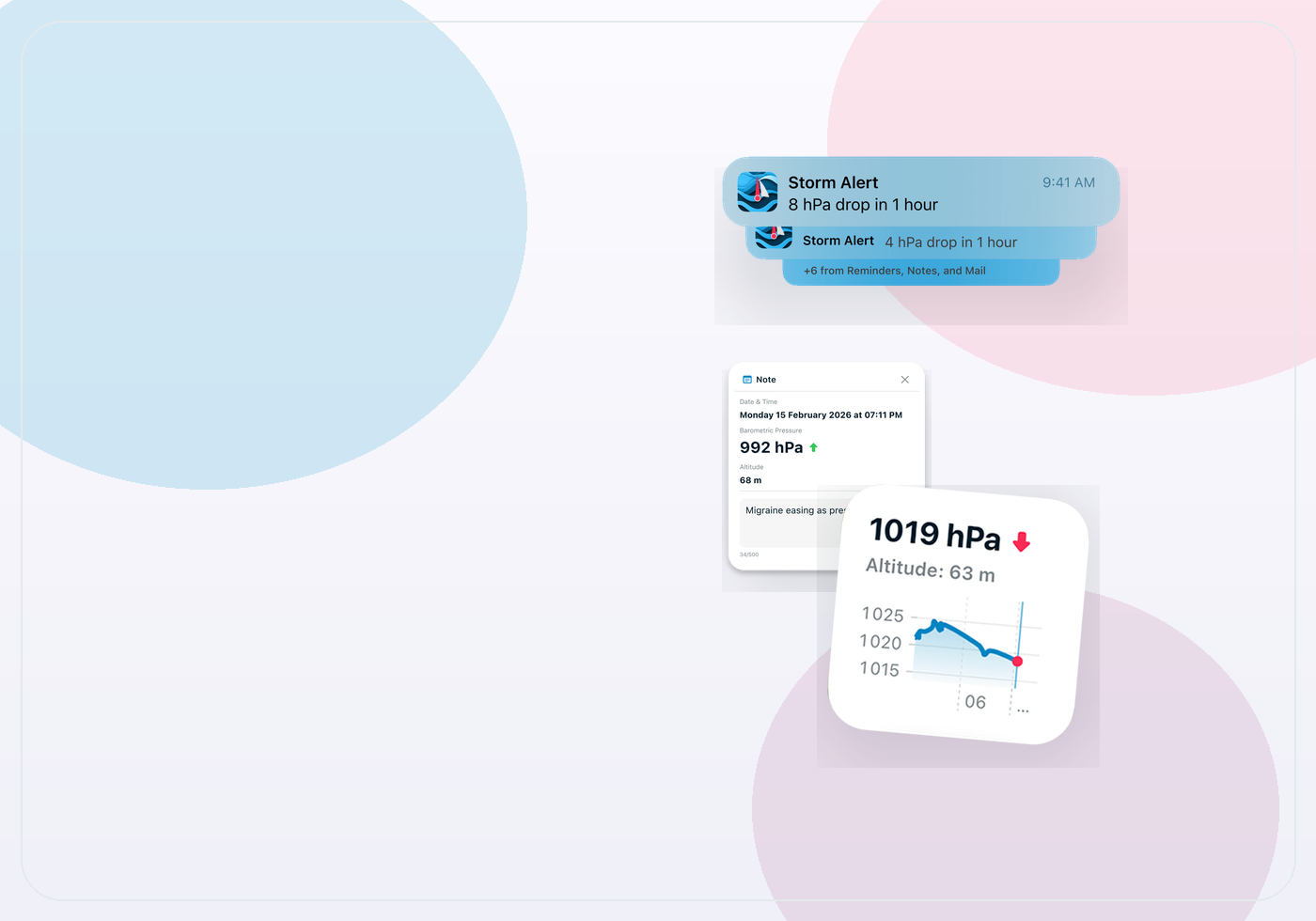
Step 1: check the recent curve before you write anything down
When a day starts feeling off, begin with the recent pressure curve rather than one current number. Look at whether pressure has been stable, dropping, recovering, or swinging. That gives you context before you start assigning meaning to the day.
This step matters because weather-sensitive patterns often show up in the movement of the curve rather than in one obviously high or low reading. The workflow works better when the graph comes first and the interpretation comes second.
Step 2: save one short note when the day becomes worth remembering
A short note is enough. Save when symptoms began, whether they built quickly or gradually, and one or two details that might matter later such as sleep, storms, travel, or a missed meal. The note is not there to explain everything. It is there to anchor the curve to a real moment.
Keeping the note short is what makes the workflow durable. If the process becomes too heavy, it stops being useful on ordinary days, and then the pattern becomes harder to evaluate honestly.
Step 3: let alerts act as reminders, not conclusions
If rapid change already seems relevant to you, alerts can help by prompting you to check the graph or save a note at the right moment. The alert is not the answer. It is the reminder to look while the local pattern is still unfolding.
Used this way, alerts reduce the odds that you only remember the weather after the day is over. They keep the workflow timely without turning every notification into a medical claim.
Key takeaways
- This page is about the routine itself, not whether pressure tracking is worth trying in the first place.
- Timing and consistency matter more than chasing one suspicious pressure number.
- The useful pattern usually appears when several entries are reviewed together later.
Step 4: review several days together after the fact
The useful pattern almost never appears after one note. It appears after several days, when you can compare whether the same kind of drop, rebound, or unstable sequence keeps showing up. That is when the workflow becomes more honest and less emotional.
If a pattern does start repeating, reviewing the evidence and limits around the weather–headache relationship can help you keep it in perspective. Your record may help you protect margin on similar days, discuss the observation with a clinician, or simply feel less surprised when the same setup comes around again. The workflow is still about awareness, not proof.