Why sailors still benefit from a local pressure record
Start with the latest official marine forecast and active warnings. The National Weather Service notes that marine forecasts cover large areas and commonly describe wind, waves, and significant weather as ranges; actual conditions can fall above or below those ranges. Its safe-boating marine forecast guidance recommends obtaining the latest forecast and warning information before setting out. A local pressure record then adds context about what the atmosphere has been doing around your departure point; it does not replace that forecast.
That difference matters most if you sail the same area often. Over time, the pressure curve becomes part of local memory. You start recognizing which kinds of days stayed easy, which tightened up faster than expected, and which looked ordinary until the weather began to move.
Where the barometer helps before, during, and after the sail
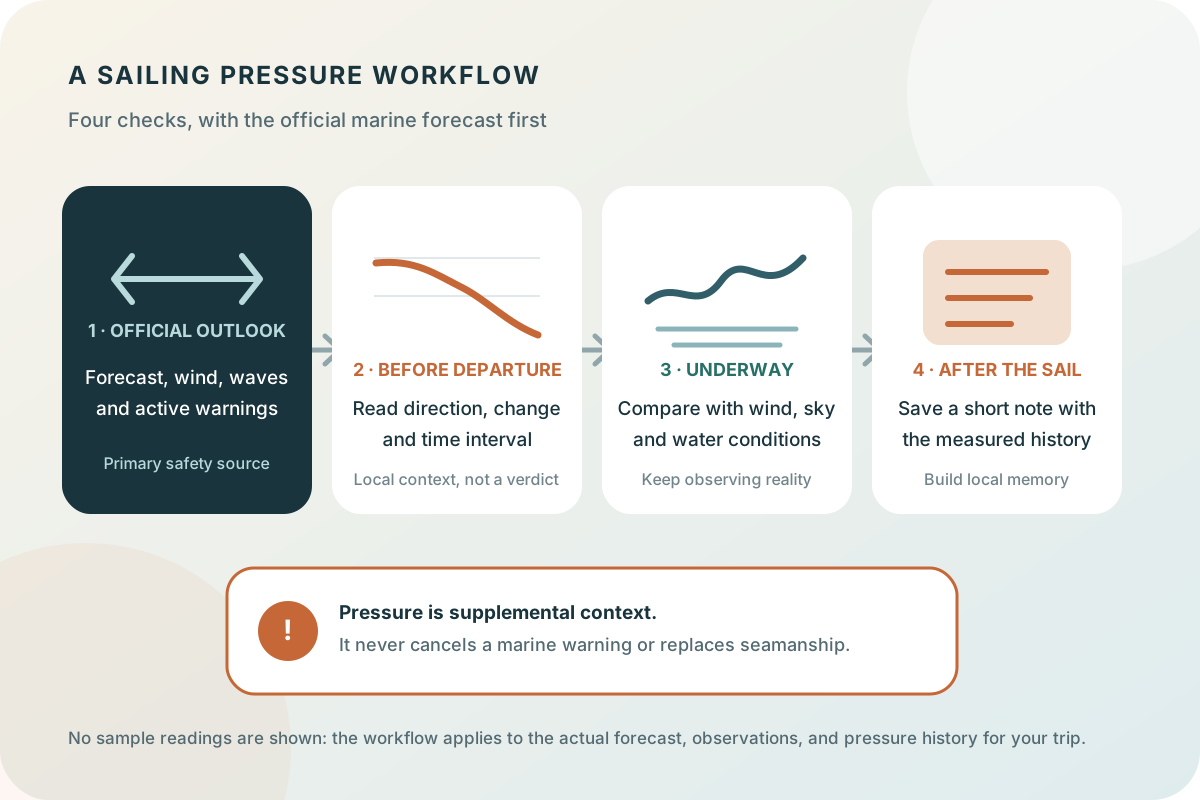
For a structured pre-departure pressure check, read the graph in three parts: direction, amount of change, and time interval. Compare that local pattern with the forecast and warnings already checked. Underway, keep watching the actual wind, sky, visibility, and water rather than treating a phone graph as live marine guidance. After the day, save a brief note beside the measured history so the next departure check has useful context.
That spread is important because a sailing barometer is not only a launch tool. It is also a review tool. A local curve paired with a short note about when the day turned rougher or easier gives you something much more concrete than a vague memory of the weather.
Why notes matter more than one dramatic reading
A single falling value can feel dramatic, but it is often the note attached to the graph that makes it useful later. A quick line about a front arriving early, an unexpectedly rough return, or a cleaner-than-forecast afternoon teaches more than the number alone. The note gives the curve real meaning.
That is why sailors who repeat the same coast, bay, or crossing often get more out of a barometer over time. The app becomes a place where local weather memory accumulates instead of disappearing as soon as the day is over.
Key takeaways
- Check the latest marine forecast and active warnings before interpreting the pressure graph.
- A sailing barometer is strongest as a local trend-and-memory tool, not as a stand-alone forecast source.
- Its value is spread across the whole day: before departure, while underway, and afterward when you review notes.
- Pressure never cancels a warning or replaces direct observation and seamanship.
What Barometric Pressure adds to a sailing routine
Barometric Pressure adds value because it keeps local history, alerts, and notes in one place and keeps them available even when connectivity gets weaker. It fits naturally beside the forecast rather than trying to replace it.
That is the right role for a sailing barometer: not an oracle or launch/no-launch machine, but a compact local record used alongside official marine forecasts and warnings, direct observation, and sound seamanship.