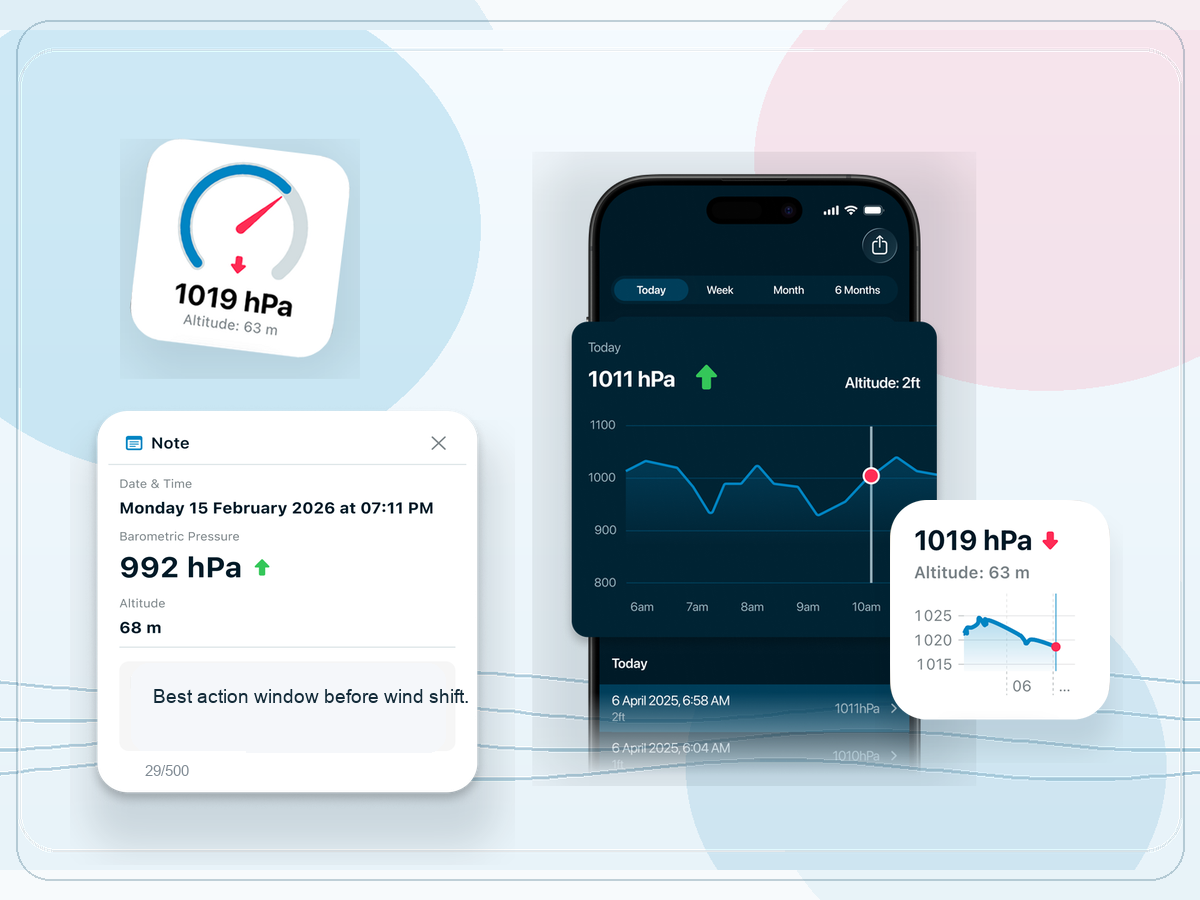
Before the trip, check the recent trend
Before you leave, the graph helps you read whether pressure has been steady, rising, or falling across the last few hours. That does not predict success, but it gives you a local starting point for the session. A steady graph, a pre-front drop, and a post-front rebound each frame the trip differently.
This is why the graph matters more than a single fishing-pressure reading. One number can feel dramatic without actually meaning much. A trend tells you whether the day has been quiet, unsettled, or changing fast enough to deserve more attention before you launch.
During the trip, note what actually changed
The middle of the session is where notes earn their place. Save when the trip improved, when it died off, when wind shifted, when a front became obvious, or when tide and current mattered more than the pressure line. Those short notes keep the graph tied to what the water actually did.
This matters because pressure is rarely the only story. A trip can look interesting on the graph and still be dominated by water movement, seasonal position, or poor timing. Logging the rest of the setup protects you from giving the barometer too much credit or too much blame.
After the trip, review the graph like a session record
After the trip, the graph becomes easier to read because you can compare it with what actually happened. Did the best window arrive during a steady stretch, a pre-front drop, or a rebound? Did the weather look dramatic but change little on the water? Did tide or current matter more than the atmospheric side of the day?
That is the real value of pressure tracking for fishing. It gives you a local record you can compare against your own notes instead of trying to remember whether the day felt 'good on the barometer' weeks later.
Key takeaways
- This page is about the logging workflow, not about proving what pressure means in the abstract.
- The most useful fishing record is usually built before, during, and after the trip.
- Notes and export matter because they turn the graph into a real trip log instead of a one-day impression.
Use Notes and export to build a better record
Notes are where the fishing log starts becoming useful. A short note tied to the reading that mattered keeps the record specific instead of vague. Over time, those small notes make the graph more trustworthy because you are comparing real trips, real timing windows, and real water conditions.
If you want to go further, the app can also export history to CSV or JSON so the record is easy to review outside the app later. That is the practical payoff. You are not asking the app to tell you when fish will bite. You are using it to keep a cleaner trip log around your own waters and your own timing.