What does the evidence support?
A small Bemidji State University laboratory study tested yellow perch feeding over 12 trials involving rising, falling, and steady pressure. It did not find a statistically significant relationship between pressure and the amount eaten. Feeding changed over the study period as the fish acclimated to laboratory conditions, which complicates interpretation.
That result does not prove that all fish ignore pressure. It also does not establish a best number for bass, trout, or saltwater species. A controlled feeding trial is different from an angler's catch rate, which also depends on where and how the angler fishes. Treat a specific species and setup as evidence about that setup, not a universal rule.
Temperature is another reason to avoid a one-number ranking. Florida's Fish and Wildlife Conservation Commission lists species-dependent preferred temperature ranges and explicitly notes variation. A pressure recommendation that ignores the water and species leaves out important context.
Key takeaways
- A pressure value alone cannot account for species, habitat, season, or fishing effort.
- The same current pressure can follow a rise, a fall, or a steady period.
- Record hours fished and changes in location or technique before attributing results to weather.
The same pressure can describe different trips
Imagine three trips that begin at 1012 hPa. On one, the value has remained close to that level all morning. On another, it has fallen from 1020 hPa. On a third, it has risen from 1004 hPa. These are illustrative examples, not recommended bite thresholds.
The number at departure is identical, but the recent weather histories differ. Check the local forecast to establish whether a front or wind change is expected, then observe what is actually happening at the water. Do not infer the same fishing conditions from the same final reading.
For a deeper explanation of rising and falling patterns, use the companion article. The practical question here is whether the pressure context helps you compare fishing opportunities, not whether a dial can rank them automatically.
Three practical scenarios to compare
Steady pressure, familiar water: use a safe, repeatable session to establish a useful comparison. Record the species, area, water temperature if measured, and fishing effort. Do not label the trip good or bad before fishing just because the reading is near the standard atmosphere.
Falling pressure before a front: check the timing of wind, thunderstorms, and your safe return. If conditions are suitable, record whether light, current, or wind changed alongside the pressure. A better session would not by itself show which factor mattered. Never stay out to chase an assumed pre-storm bite.
Rising pressure after a front: compare the changed wind, water conditions, and presentation with your previous session. If you move from shallow cover to deeper water or change tackle, record that decision. A different catch result cannot fairly be assigned to pressure while those changes are left out.
Plan a fishing trip around a cold front without treating pressure as a safety signal
A sample log that keeps comparisons honest
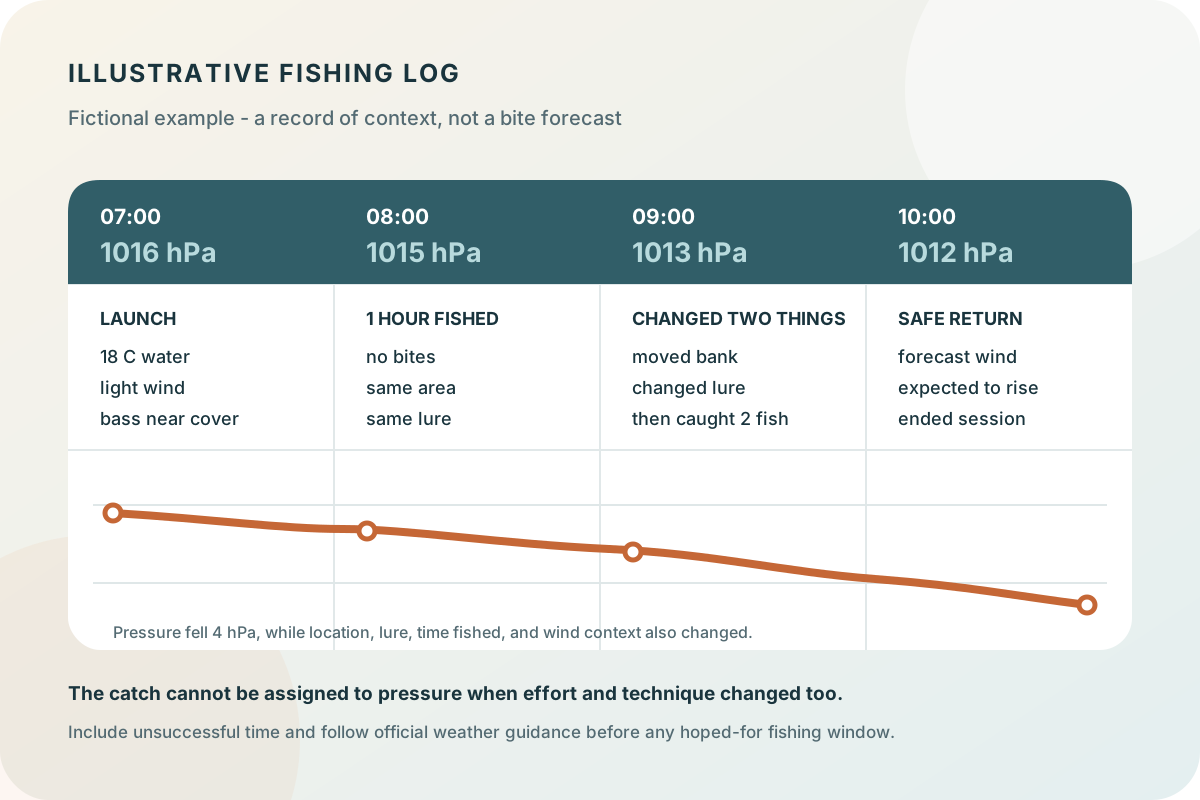
The example below is fictional and shows how to record context, not what fish should do at these pressures. The useful record includes effort and unsuccessful periods, not only the best catch of the day.
Two fish in one hour and two fish in four hours are different catch rates. Likewise, a trip with several anglers cannot be compared directly with a solo session without accounting for effort. Keep the water and target species visible in your notes so a pattern from one location is not silently generalized to another.
| Time | Pressure | Observation |
|---|---|---|
| 07:00 | 1016 hPa | Launch; 18 C water measured; light wind; target bass near cover. |
| 08:00 | 1015 hPa | No bites in first hour; same area and lure. |
| 09:00 | 1013 hPa | Moved to another bank and changed lure; two fish in the next hour. |
| 10:00 | 1012 hPa | Returned before forecast wind increase; pressure was not the only change. |
How to make the most of Notes
In Barometer, attach a note to a saved pressure measurement when something worth remembering happens. Include the event time if it differs from the measurement time. A note such as 'changed bank and lure at 09:00' is more useful later than 'low pressure worked.' Keep a separate trip note if no measurement was saved near the event.
History lets you review collected pressure readings; export data can help you compare sessions outside the app. Widgets and alerts can make pressure changes easier to notice, but they do not measure bites, water temperature, or fish activity. Those observations need to come from your own log.
Use the downloadable checklist to keep the routine consistent before, during, and after a trip. For the full logging workflow, follow the fishing tracking guide rather than adding more complexity to every note.
Let the safety forecast decide whether to go
A pressure trend is not a lightning detector or a marine warning service. Check official forecasts and warnings for the water you will use, and allow time to reach shelter or return safely. A stable or rising barometer does not override a thunderstorm forecast.
Once safety is covered, choose a session you can fish effectively and record it consistently. Your log may reveal useful local associations over time, but it will not turn a pressure reading into a guaranteed best fishing day.