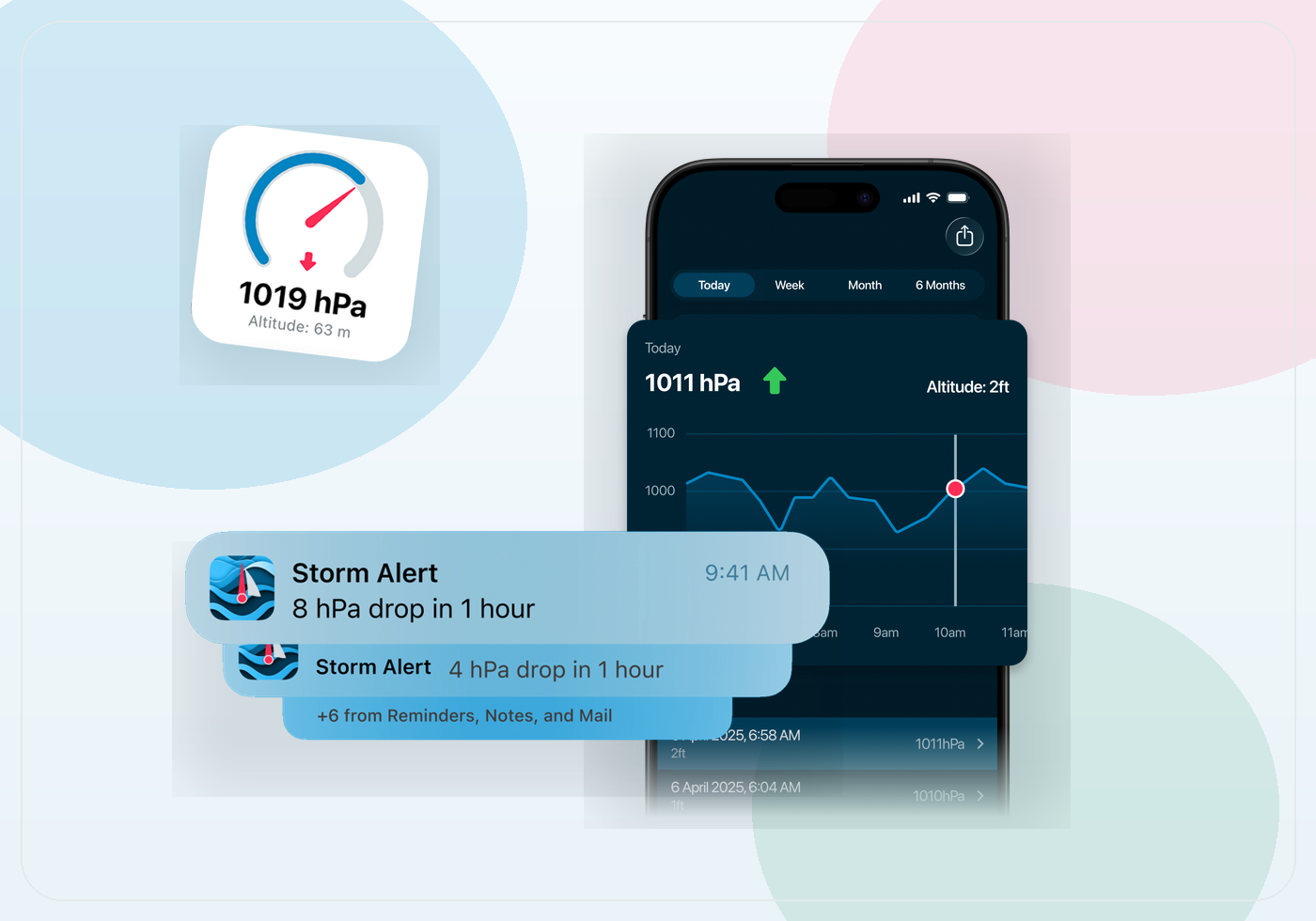
What a pre-front pressure setup can look like
Before a cold front, the pressure curve may begin to fall or become more active across a few hours. That is the kind of movement anglers usually associate with a pre-front window. The graph does not tell you exactly how fish will behave, but it can confirm that the atmosphere is shifting in the direction the forecast suggested.
That local confirmation matters because fronts do not always arrive on the exact timetable you expected. The curve helps you judge whether the change is already underway, still building slowly, or not yet doing much locally.
Why the window is not automatic
Cold-front fishing advice often sounds too clean. A falling graph does not guarantee a good window, just like a stable graph does not guarantee a dead one. Wind, water temperature, cloud cover, current or tide, and the time you actually arrive all affect how a pre-front session feels.
That is why pressure works better as confirmation than as prophecy. It helps you say, 'yes, conditions are changing,' but it should not be the only reason you decide how long to stay, what water to fish, or how hard to chase the session.
What to check before you leave
Before the trip, compare the pressure graph with the forecast, the sky, and whatever local knowledge you already trust. If the graph is dropping and the wind or cloud picture supports a front building in, that may justify moving faster, choosing more protected water, or shortening the plan so you are not stuck when the weather turns harder.
If the graph is not moving much yet, that does not mean cancel. It simply means the front may not be expressing itself locally the way the broader forecast implied. That is useful information in its own right.
Key takeaways
- A pre-front drop can be useful context, but it is not an automatic bite guarantee.
- Wind, cloud cover, water movement, and timing still shape how that window fishes.
- A local graph and a few notes are more reliable than generic cold-front hype.
How to log the session so the next one is smarter
Pre-front sessions are ideal for notes because they are easy to mythologize later. Save when the trip started, when pressure was moving fastest, when the weather visibly changed, and when the session felt best or worst. You are building evidence about your own waters, not trying to prove a rule for everyone else.
That record is what turns pressure into a real tool. Without notes, the graph stays interesting but slippery. With notes, it becomes a way to compare one front cycle with the next.