When migraine pressure tracking is worth trying
Pressure tracking is usually worth trying when weather seems relevant to your migraines often enough that you want a steadier record. It can be useful if rapid changes repeatedly feel harder on your body, if forecast summaries feel too broad, or if you want a way to review recent local conditions without guessing what the weather did after the fact.
It is less useful if you expect one graph to explain every symptom day. The value comes from pattern awareness, not from turning one number into a verdict about why you feel bad.
What the app can and cannot help with
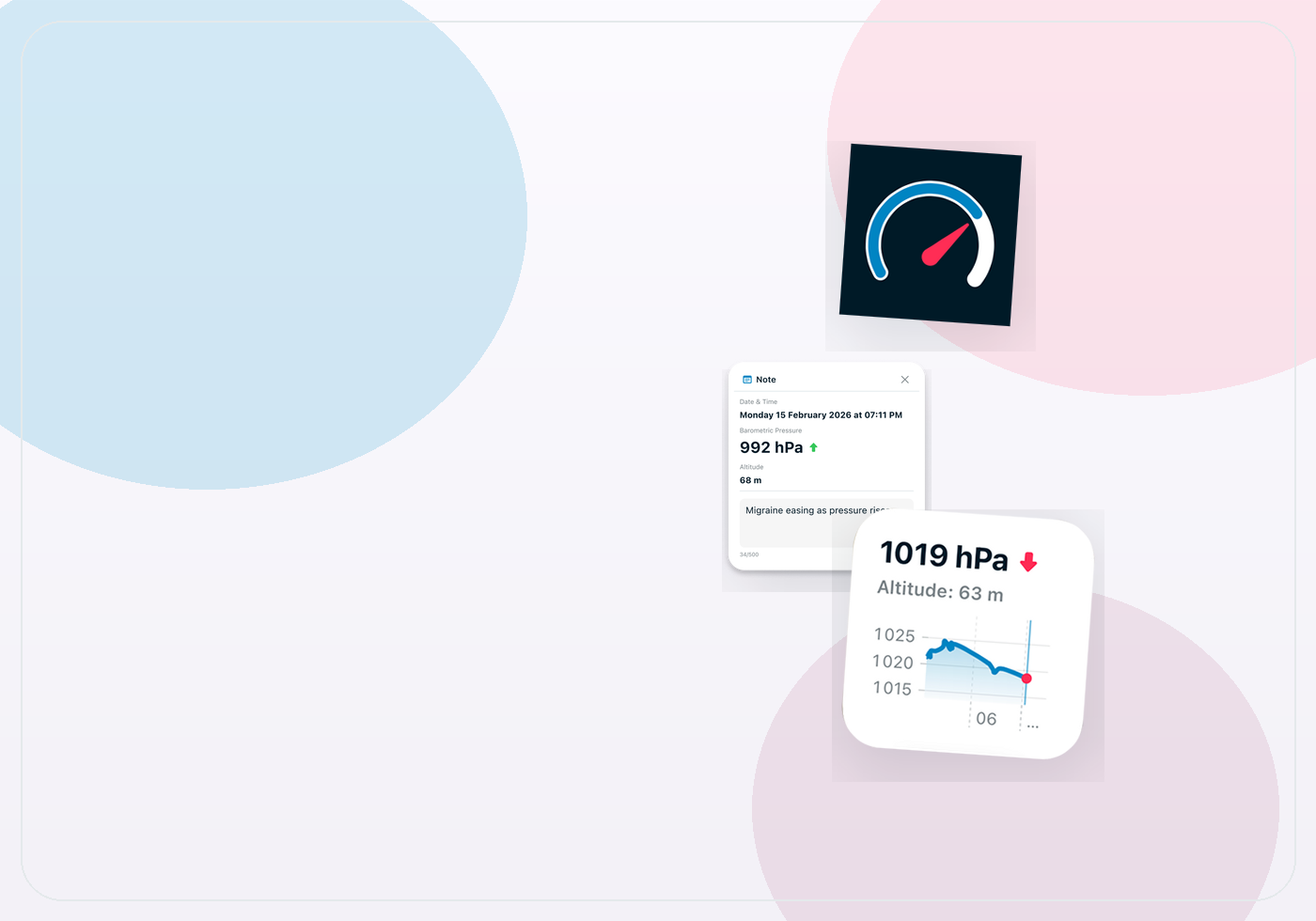
Barometric Pressure can help you keep local history, save notes, and notice whether certain types of change keep showing up around harder days. What it cannot do is diagnose migraine, predict exactly how a day will feel, or separate weather from every other trigger in your life.
That limit is important because it keeps the tool in the right role. The app supports awareness. It does not replace clinical care, treatment, or broader trigger tracking.
Why the local record matters
A generic forecast may tell you that weather is changing in the region, but it usually does not tell you exactly what the local pressure around you did across the last few hours. A local record fills that gap. That makes it easier to review a difficult day with something more concrete than a vague sense that the weather was different.
This is where the app earns its place. Over time, local history and a few well-timed notes can show whether pressure-sensitive patterns deserve more attention in your own life.
Key takeaways
- Migraine pressure tracking is most valuable when weather already feels like a plausible influence and you want a steadier record.
- The point is awareness and pattern recognition, not proving that pressure explains every migraine day.
- Barometric Pressure helps by keeping local history, alerts, and notes together in one place.
What a good routine usually looks like
A good migraine pressure routine is small enough to keep. Check the graph when the day feels worth remembering, save a short note if symptoms start or change, and review several days together instead of obsessing over one event. That rhythm keeps the data useful without making it emotionally heavy.
The best outcome is not certainty. It is being less surprised. If the same kind of shift keeps appearing before harder days, the record may help you protect margin in your schedule and use the app more intentionally.