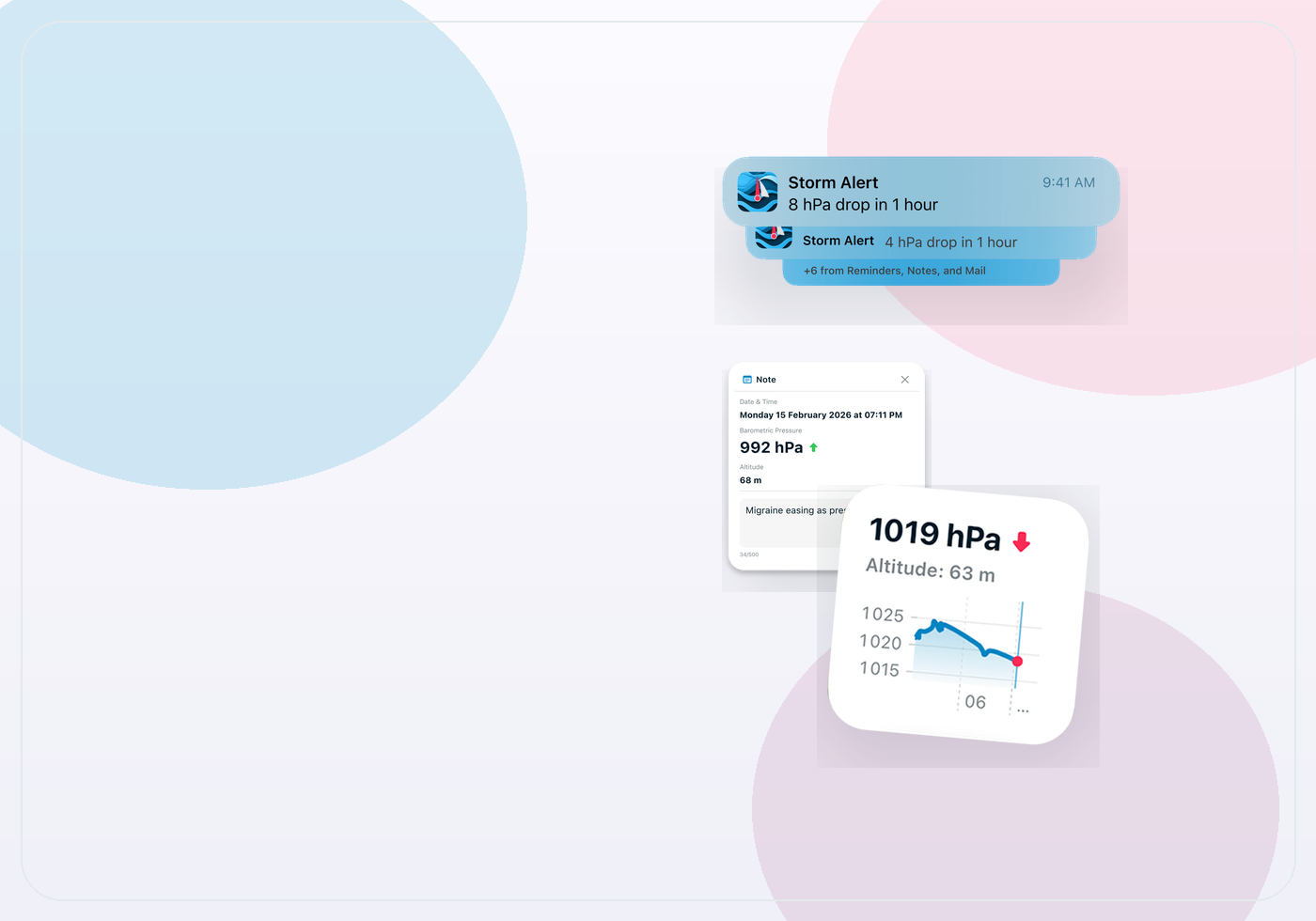
Why pressure should sit beside other triggers
The relationship between weather and headaches can feel like the obvious explanation because weather is visible and easy to talk about. But migraine days often happen inside a stack of smaller factors. A useful note keeps pressure in the same frame as sleep, meals, stress, travel, hormones, and hydration. That is not to minimize the weather. It is to make the record more truthful.
This is where many tracking routines go wrong. If every note focuses only on the barometer, it becomes harder to tell whether pressure really repeated often enough to matter or whether it simply stood out more than the rest of the day.
What to include in a weather-trigger note
A weather-trigger note does not need many fields. In practice, the most useful details are symptom start time, whether pressure was dropping or swinging, sleep quality, whether you skipped a meal, stress level, and anything clearly unusual such as travel or a storm day. Those few items are enough to give the graph context later.
The note stays better when it remains short. The point is to make comparison possible, not to capture every detail of the day. A small note you can keep for a month is more valuable than a perfect note you abandon after three days.
How to review several notes together
The pattern only starts becoming useful once you look across several entries. You may find that the same kind of rapid pressure drop keeps showing up, but only when sleep was already poor. Or you may notice that weather-sensitive days happen even without dramatic pressure movement. That kind of nuance is exactly what a better note routine is supposed to reveal.
What matters is not certainty. What matters is whether the record helps you recognize which kinds of days deserve more caution, more recovery time, or a closer look at your usual trigger stack.
Key takeaways
- Pressure belongs in the trigger record, but it should not be the only variable you track.
- A short note about sleep, stress, meals, and timing can make the graph much more useful.
- The goal is pattern recognition, not proving that every migraine day was weather-driven.
How Barometric Pressure helps keep the routine simple
Barometric Pressure keeps the graph, alerts, and notes together, which lowers the friction of tracking. You do not need to recreate the weather later from a memory or another app. The local curve is already there, and your note can stay tied to the reading that mattered.
That makes it easier to treat pressure as one part of a broader trigger record instead of as a stand-alone theory. Over time, the app becomes a cleaner place to compare what the weather was doing with the rest of your day.