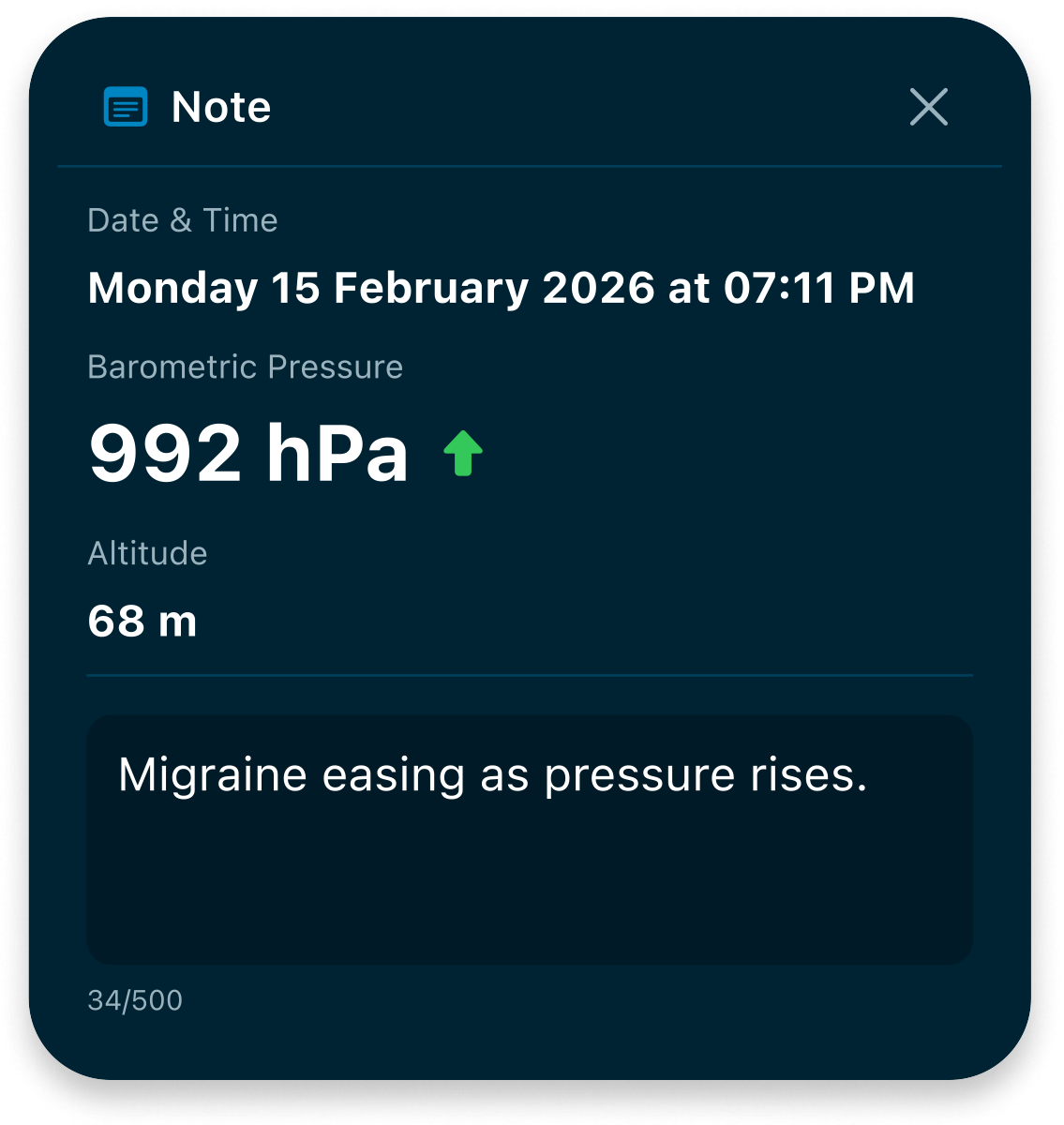
Keep the note small enough to repeat
A useful headache note can be only a sentence or two. Save when the headache began, whether it rose quickly or slowly, and how strong it felt. If something obvious also mattered, such as travel, poor sleep, storms, or a long day outdoors, add that too. You do not need to capture every detail for the note to become helpful later.
The reason to keep it small is simple: consistency beats ambition. A simple note routine survives ordinary days and rough days alike, which gives you a more honest record than a system that only gets used when the weather already seems suspicious.
Tie the note to the reading that mattered
The best moment to save the note is near the reading or alert that made the day feel worth remembering. That keeps the note attached to the pressure curve instead of to a broad after-the-fact impression like the weather changed today. Later, when you review the graph, the note sits exactly where it belongs in the history.
That placement matters because it makes the curve easier to read. You can see whether the headache began during a sharper drop, after a rebound, or on a day where pressure stayed relatively quiet and another trigger may have mattered more.
What details are usually enough
Most people do not need a giant template. A useful note often includes symptom start time, rough intensity, whether the day felt weather-sensitive, and one or two context details such as stress, sleep, hydration, or time outdoors. Those details are enough to make the note helpful without turning it into a second task you start avoiding.
If the same kind of pressure and headache pattern keeps appearing in your notes, it may be worth discussing as an observation. If not, that is useful too. Either way, the record becomes less about guessing and more about what actually repeated.
Key takeaways
- Short, repeatable notes are more useful than perfect detail you cannot sustain.
- Timing matters more than trying to assign one pressure number as the cause.
- A note tied to the reading is easier to trust later than a memory about the weather.
How to review the notes later
The real payoff comes after several notes, not after one. Review the graph and the note together when the day is over or at the end of the week. You may notice a repeated timing pattern, or you may discover that pressure only explains part of the story. Both outcomes are useful because they make future rough days less mysterious.
That is where Barometric Pressure helps. Notes, alerts, and history stay in one place, so headache days are easier to compare without trying to reconstruct the weather from memory alone.