Why bass anglers care about the trend
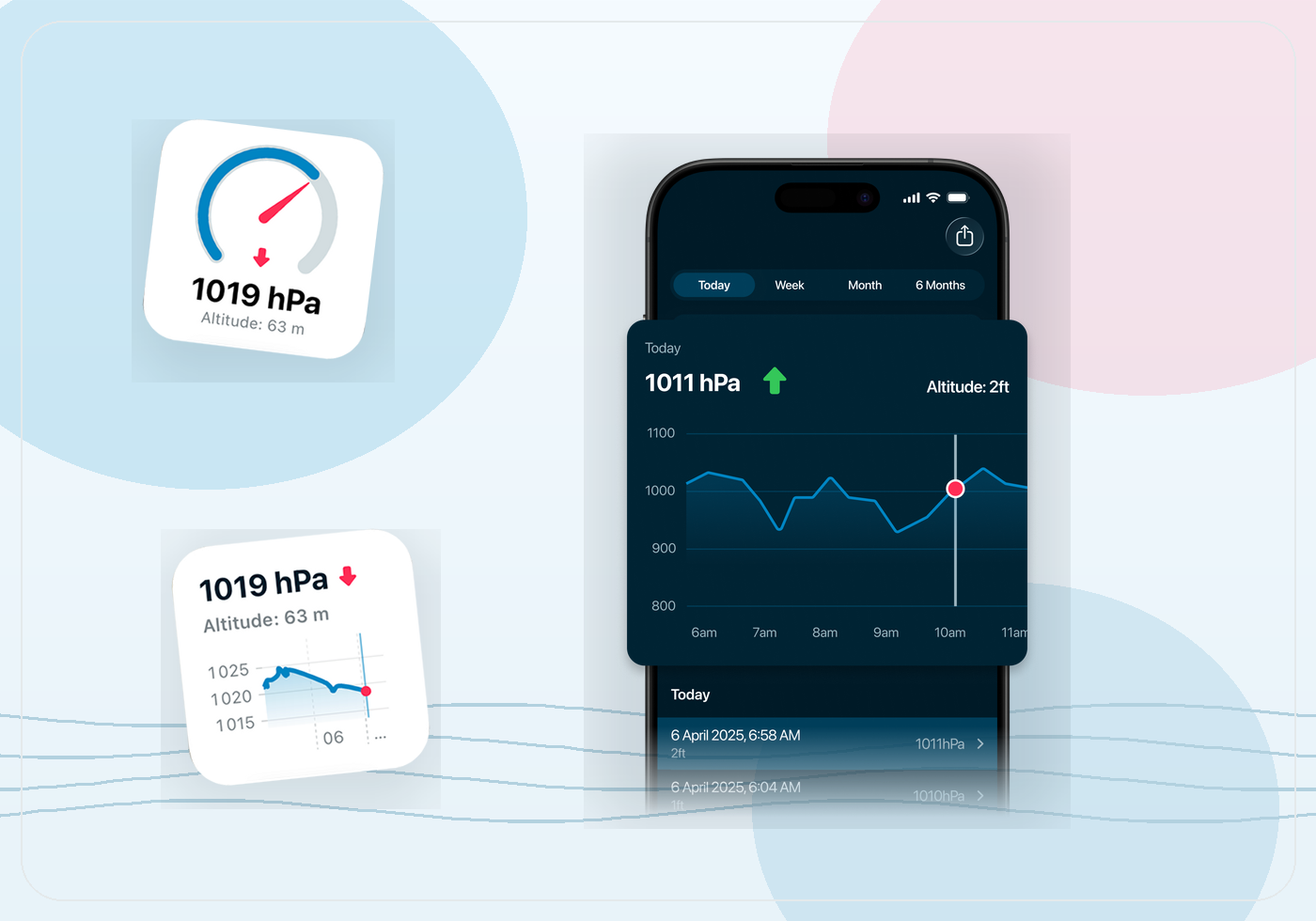
Bass fishing conversations usually become more useful when they move away from one pressure value and toward the pressure trend across the last several hours. A slowly falling line can fit a front building in. A steadier graph can fit a calmer weather stretch. A quick recovery after a front can help explain why fish feel less cooperative even when the sky looks cleaner again.
That trend matters because it gives you timing. It tells you whether the atmosphere has been stable, getting more active, or settling back down. That is more actionable than staring at one number and trying to decide whether it is universally good or bad for bass.
Why bass context matters as much as the graph
Bass still respond inside a real seasonal and structural picture. Pre-spawn fish, summer offshore fish, shallow post-frontal fish, and pond bass pinned to shade are not all going to react the same way to identical pressure movement. Water temperature, depth, forage, cloud cover, and wind can all change how much the pressure trend actually matters.
That is why pressure helps most as a context clue. It may tell you the day is changing, but it does not replace decisions about cover, retrieve speed, or where bass are likely to position. The graph can sharpen those choices. It does not make them for you.
How to use pressure before a bass trip
Before you leave, compare the recent pressure trend with the forecast, especially if a front is expected. If the graph has already started dropping, that may confirm that the day is shifting sooner than a generic forecast headline suggests. If the line is flat or recovering, the day may require more patience and more attention to the seasonal pattern rather than a pre-front expectation.
This is also a good place to use alerts. A rapid change alert is not a command, but it can be a useful prompt to recheck the graph, tighten your plan, or leave a short note about what the lake looked like when the pressure started moving faster.
Key takeaways
- For bass fishing, the recent pressure trend is more useful than one raw reading.
- Season, water temperature, and available cover often matter as much as the barometer itself.
- Notes tied to the graph help separate repeatable patterns from one-off stories.
What to log after the trip
A bass log does not need to be complicated. Save the pressure trend, the season, water temperature if you know it, the kind of cover or structure that produced, and when the best window happened. Those few notes become valuable because they stay tied to the graph instead of becoming vague memory a week later.
Over time, that record is what turns pressure into something real. You may learn that a gentle fall helps on one lake, that post-front recoveries still produce if you slow down, or that pressure matters less than wind on your usual water. That kind of pattern is much more trustworthy than any universal claim about the best pressure for fishing.