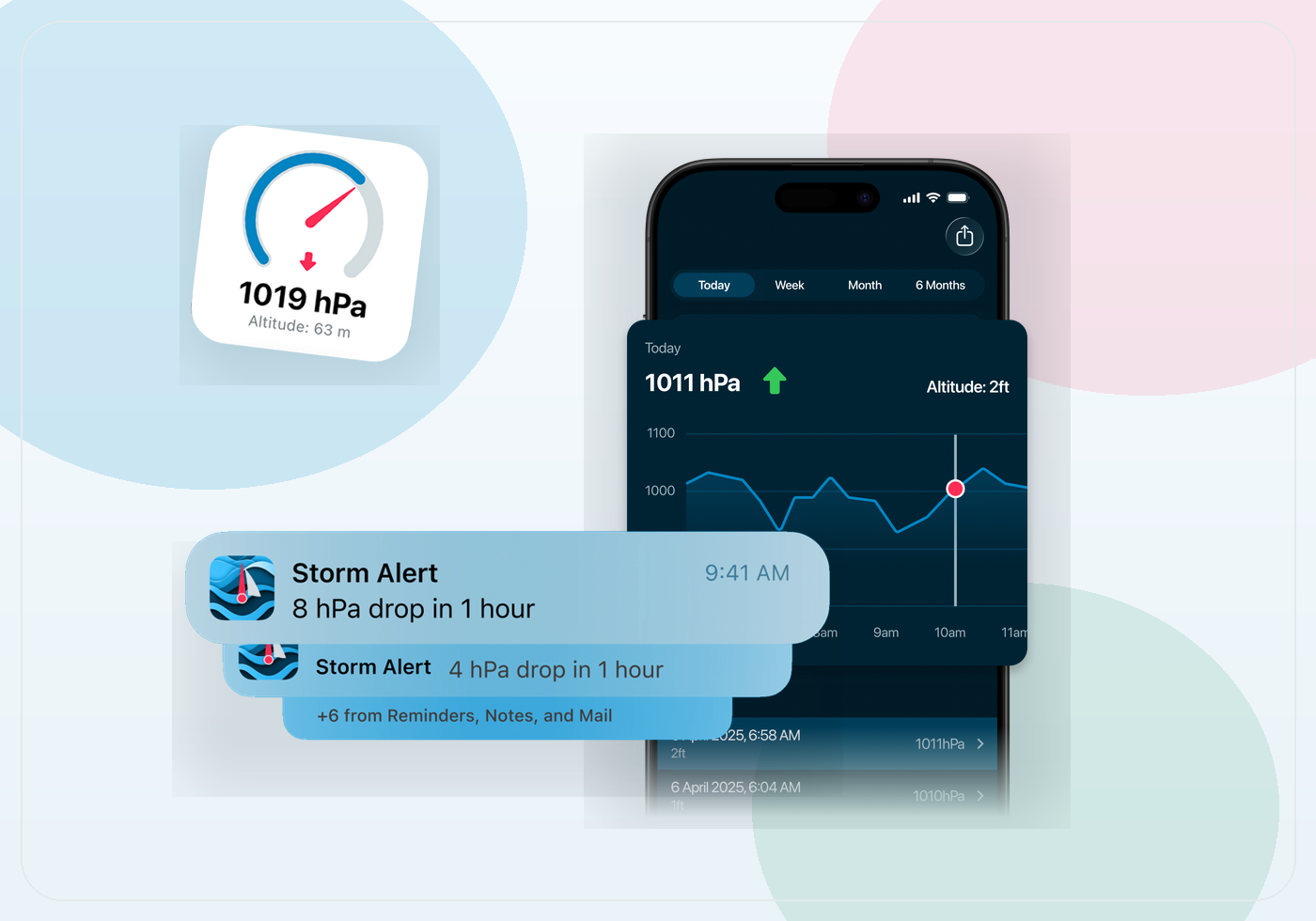
Why a rapid-change alert can matter
A rapid-change alert matters because it is telling you the local curve is moving enough to deserve attention. That is useful on storm-aware days because weather often gets harder to interpret if you wait until the signs are obvious. The alert can be the nudge that gets you to check sooner rather than later.
This is especially practical if you are outdoors, near the coast, or simply not reopening the app often. The alert reduces the odds that you only notice the change once the weather story is already well underway.
What to do right after the alert
Open the app and look at the last few hours of the graph. Check whether the move is sharp. If pressure is falling, review what a falling-pressure trend can mean. Then compare the graph with the forecast you already saw and look for other signs that the weather is changing. If the sky, wind, radar, or marine forecast all line up with the alert, the case for caution becomes stronger.
That pause is important because the alert is not meant to be the entire decision. It is the trigger for a better weather check. Sometimes that means simply staying aware. Other times it means shortening the route, delaying departure, moving toward shelter, or choosing the easier return while the day is still manageable.
Why storm alerts need a response plan
A storm alert is more useful when you already know what the next safe step usually looks like. That might mean heading toward the ramp sooner, trimming the route, moving off exposed water, or double-checking radar and marine warnings before you continue. The alert does not need to tell you exactly what to do if you already have a response plan in mind.
This is what separates storm use from general day-to-day alert use. The question is not only whether the pressure changed. It is whether the alert arrived early enough for you to do something simpler and safer while the day is still manageable.
Key takeaways
- A storm alert is a prompt to review margin and weather context, not a weather verdict by itself.
- The graph after the alert matters more than the notification alone.
- Storm alerts are strongest when paired with forecasts, notes, and a simple response plan.
Why notes still matter after unstable days
The strongest storm-alert routine includes a short note when an alert actually mattered. Save whether the weather changed, whether you altered the plan, and whether the alert arrived early enough to help. Those notes make the next alert more meaningful because they give you history, not just notifications.
Over time, that pattern helps you see which kinds of unstable days really justified the alert and which ones looked dramatic on the graph but changed little around you.
How Barometric Pressure fits storm awareness
Barometric Pressure works well for storm awareness because it keeps alerts, graph history, and notes together. The app does not replace radar, marine warnings, or the broader pressure forecast. It supports them with one more local signal that can arrive at the right moment.
That is the sober way to use a storm pressure alert. It is not a stand-alone forecast. It is an early prompt that helps you recheck the weather picture before you run out of easy options.