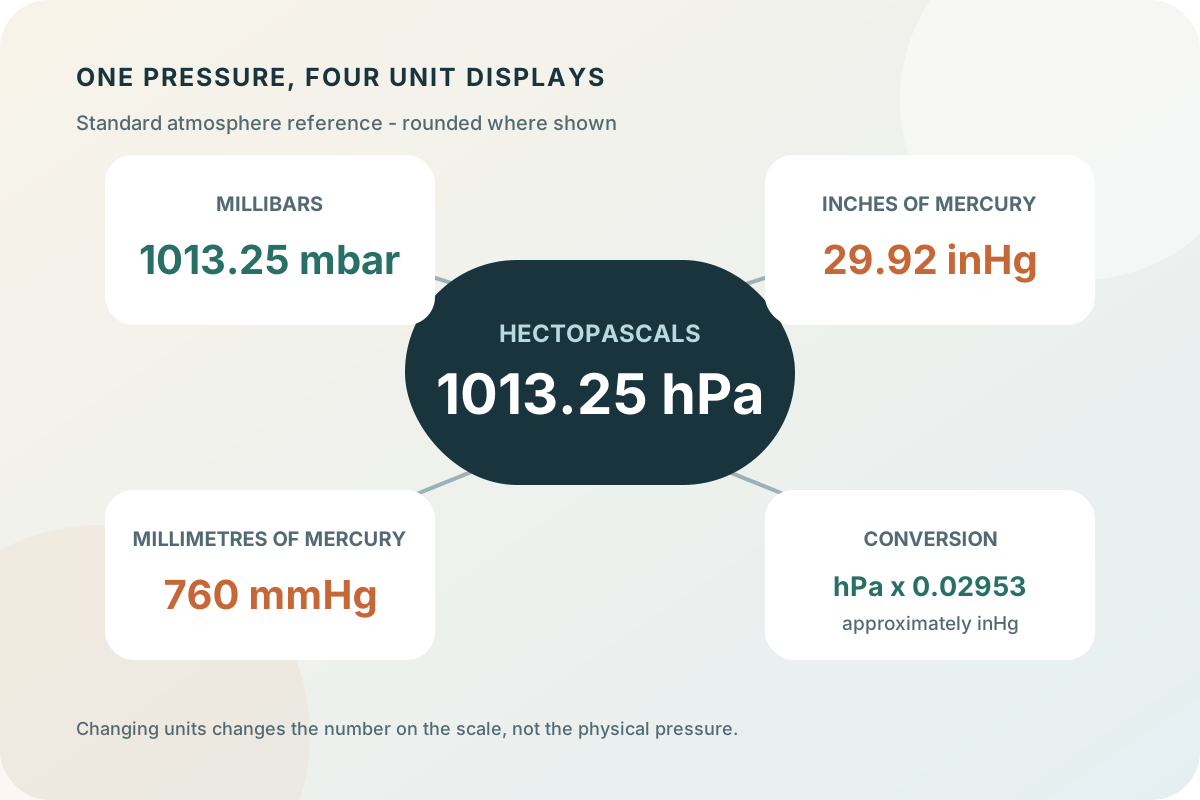
hPa, mbar, inHg, and mmHg compared
The pascal is the SI unit of pressure. Weather reports commonly use the hectopascal because one hPa equals 100 Pa and produces convenient four-digit values near sea level. A millibar is also 100 Pa, so 1000 hPa and 1000 mbar represent exactly the same pressure even though the unit names come from different systems.
An inch of mercury expresses pressure through the height of a conventional mercury column. It is widely recognizable in United States weather displays and aviation altimeter settings. Millimetres of mercury use a finer mercury-column scale and are familiar in other measurement contexts. None of these display choices is inherently more sensitive; precision depends on the measurement and rounding, not the unit name.
| Unit | Standard atmosphere | Typical display |
|---|---|---|
| Hectopascals (hPa) | 1013.25 hPa | 1013.3 or 1013 |
| Millibars (mbar) | 1013.25 mbar | 1013.3 or 1013 |
| Inches of mercury (inHg) | 29.9213 inHg | 29.92 |
| Millimetres of mercury (mmHg) | 760 mmHg | 760.0 or 760 |
Key takeaways
- One hectopascal equals 100 pascals, and 1 hPa has the same numerical value as 1 mbar.
- Convert hPa to inHg with hPa x 0.02953; convert inHg to hPa with inHg x 33.8639.
- Changing the display unit does not change the underlying pressure or the shape of its trend.
How to convert hPa and inHg
For everyday conversion, use inHg = hPa x 0.029529983. Reversing it gives hPa = inHg x 33.86389. For example, 1000 hPa is about 29.53 inHg, while 30.00 inHg is about 1015.92 hPa. Keep extra digits during the calculation and round only the final display.
A pressure change converts the same way as a pressure value. A rise of 4 hPa is approximately 0.12 inHg. Because the inHg numbers are smaller, showing two decimal places is common; rounding too early can make a small trend appear flat or can exaggerate the apparent step between displayed values.
| hPa | inHg | mmHg |
|---|---|---|
| 980 | 28.94 | 735.1 |
| 1000 | 29.53 | 750.1 |
| 1013.25 | 29.92 | 760.0 |
| 1030 | 30.42 | 772.6 |
Which pressure unit should you use?
Choose hPa when your national weather service, international weather maps, or scientific references use it. Choose inHg when that is the established language of your United States forecast, marine, or aviation workflow. Millibars are numerically interchangeable with hPa, while mmHg can be useful when another instrument or record already uses that unit.
Matching the comparison source matters more than choosing a supposedly superior scale. A reading of 1008 hPa should not be compared directly with 29.88 inHg until one is converted, and neither should be compared until you know whether both values represent station pressure or sea-level pressure.
How Barometer handles unit changes
Barometer stores pressure on a hectopascal basis and converts the displayed value to the selected unit. The app supports hPa, kPa, mbar, inHg, and mmHg. Switching the setting changes labels, values, chart axes, and exported unit presentation; it does not turn one measurement into a different atmospheric event.
After changing units, compare the same timestamp before and after the switch. The numerical labels should change while the curve's peaks, troughs, and timing stay aligned. Keep the chosen unit stable when sharing notes so another person does not have to infer whether 29.7 means inHg or an incomplete hPa value.
Unit conversion does not solve context mismatches
Correct conversion can still produce a misleading comparison. A phone's pressure at its current elevation may differ substantially from sea-level pressure on a weather map. Values from different locations or times may also differ because the atmosphere changed, not because the units were wrong.
Before diagnosing a discrepancy, align the timestamp, location, pressure type, and unit. Then consider altitude and measurement uncertainty. Unit conversion is arithmetic; interpreting why two sources disagree is a separate task.